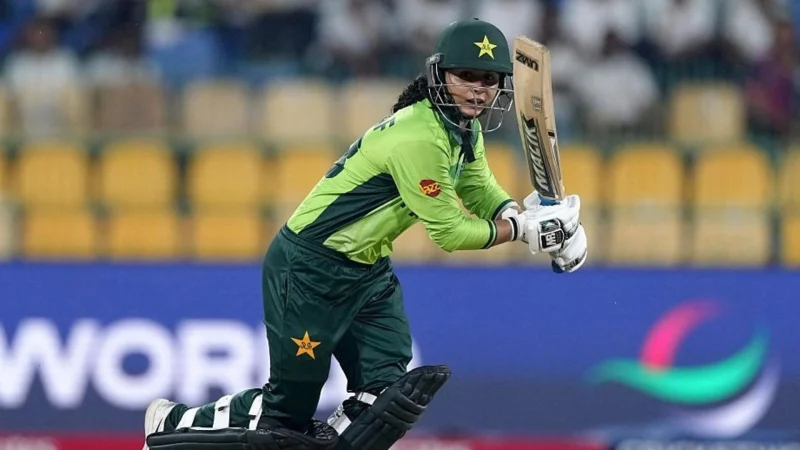
Sadaf Shamas scored 90 off 98 balls and Gull Feroza completed a second consecutive century as Pakistan beat Zimbabwe by nine wickets on May 9, 2026, in the third women’s ODI at National Stadium, Karachi. The win sealed a 3-0 series sweep and came after the opening pair put on 220 runs, one short of Pakistan’s national record for the first wicket.
Shamas’s knock was her fifth fifty-plus score in five games and her third score of 90 or more in the series, extending a run that began against South Africa before the Zimbabwe matches. Feroza’s hundred was her third fifty-plus score in the three-match series, and the pair’s latest stand added to 189 runs in the first ODI and 162 in the second, leaving them with Pakistan’s second-, third- and fourth-highest opening partnerships in ODI cricket.
The numbers underline how complete Pakistan’s opening batting has been across two series. Shamas made 61 in the second ODI against South Africa, then 97 off 82 balls in the third to help Pakistan avoid a clean sweep. She followed that with 98 in the first ODI against Zimbabwe, her maiden ODI hundred in the second, and 90 in the third to finish the series with 289 runs at 96.33.
For Zimbabwe, the closing margin did not only reflect one bad day. It was the result of Pakistan repeatedly turning strong starts into match-defining totals, with Shamas and Feroza giving the team the kind of platform that leaves little room for a chase or a comeback. The 220-run opening stand on Friday was the clearest version yet of that pattern, even if it fell one run short of a national milestone that Sidra Amin and Muneeba Ali still hold from their 221-run partnership against Ireland in Lahore in November 2022.
Pakistan have not just won the series. They have found an opening pair that has already rewritten the shape of the batting order, and the next challenge is whether that form can travel beyond Karachi and survive when the margin for error is smaller.