


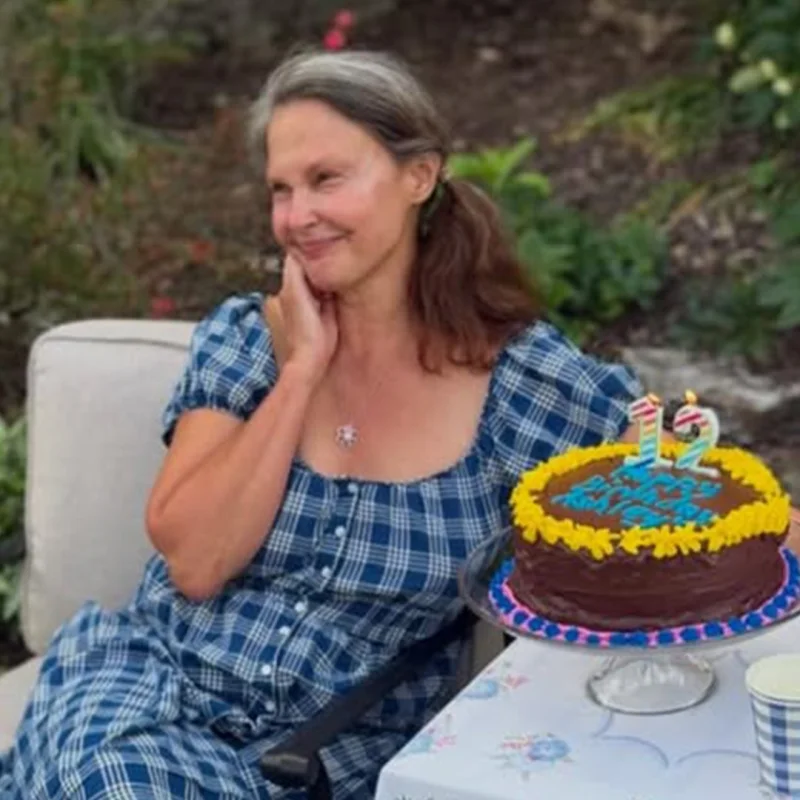
Ashley Judd marked her 58th birthday in April by throwing a party for her inner 12-year-old, and on May 12 she shared the celebration as part of the healing work she has been describing in public. In the Instagram post, Judd said that her inner 12-year-old was ready to receive love, care, attunement, delight, protection and provision.
“We backfilled what was always missing,” she wrote, describing the day as a way to give that younger self what had not been there before. Judd said the party included square dancing, a Scopes Monkey Trial True or False quiz and a dream cake “any 12-year-old would adore.”
The details read like a birthday scene, but they land as something more personal: Judd has been using milestone celebrations to work through earlier versions of herself. In the same post, she asked, “Have you ever considered, from your adult perspective, restaging for your sweet inner child an experience she either never had at all?” Her answer, in practice, was to create one.
She also placed a jar at the party so guests could anonymously confess their sixth-grade embarrassments, then reported the result with her usual directness: “Shame reduction! Who knew others were also awkward and scared at times.” The memory work tied back to 1979, when Judd recalled her sixth-grade year with teacher Mrs. Minor, including geology, dinosaurs, stalagmites and stalactites, and six weeks of square dancing in gym class.
This was not Judd’s first such gesture. For her 57th birthday, she honored her inner 9-year-old, and last summer she threw a dance party for her teen self. In a separate June 2025 post, she described that Inner Teen as a source of fire, energy, backbone, a volcanic sense of justice and outrage, integrity, unselfconscious self-expression, freedom, physical movement and powerful curiosity.
Judd said it was “an honor, right, & holy daily practice” to guide, support, listen to and be there for that Inner Teen as she heals, adding that she “de-parentify” her and relieve her of responsibilities that never should have been hers as an adolescent. Seen together, the posts show a clear pattern: Judd is not treating the work as a one-off birthday theme, but as an ongoing way of naming what she needed then and giving it to herself now.
The question she leaves behind is no longer whether the ritual is real. It is whether this kind of public inner-child repair, repeated across birthdays and stages of life, becomes a lasting part of how she defines healing.
