


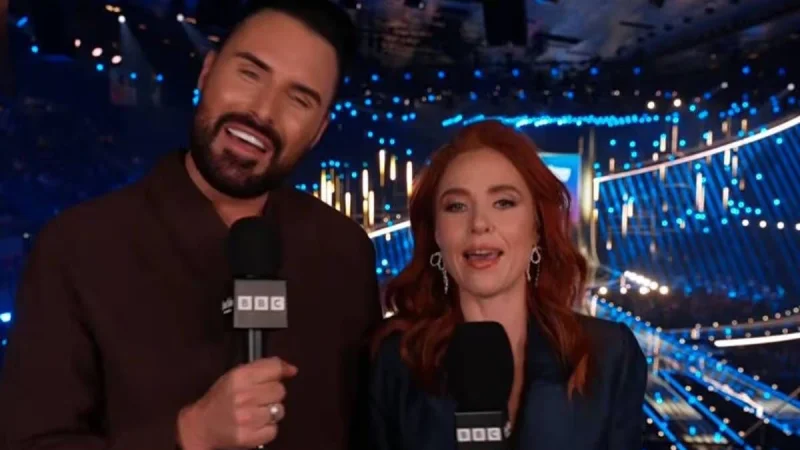
Rylan Clark and Angela Scanlon were forced into an on-air apology during the ’s live coverage of the Eurovision Song Contest first semi-final on Tuesday night, May 12, after a brief moment of bad language left viewers confused. The exchange came during the broadcast from the Wiener Stadthalle in Vienna, Austria, as the contest’s first qualifying night played out live.
Scanlon broke in to apologise “to everyone at home if you caught a little bad language,” adding: “It’s live TV, isn’t it?” Clark immediately asked, “What did I say?” Scanlon replied, “Not from you this time,” prompting him to joke, “Makes a change.” She explained that it was “live telly from the Austrian broadcast...they get a little excited,” and Clark answered, “Let them enjoy themselves.”
The moment left viewers trying to work out what had been said, with speculation later centring on Alicja’s song and the possibility that one rude word had already been censored during the performance. The apology came as Scanlon co-hosted Eurovision for the first time with Clark, stepping into a role that had previously been held by Scott Mills before he was dropped by the.

Mills was removed from the broadcaster after allegations involving “personal conduct” linked to a historic police investigation into sexual offences involving a teenager under 16. He denied all allegations of wrongdoing. Against that backdrop, Scanlon’s debut added a fresh reset to the ’s Eurovision team at a contest now in its 70th year, with the live broadcast leaning hard on the unpredictability that keeps the show pulling in a wide audience.
Scanlon had spoken before the contest about what the job meant to her, saying it felt like “joining the greatest party on earth − equal parts thrilling and terrifying!” She also said she had grown up watching Eurovision with her three sisters and making “very serious (and wildly biased) scorecards” from the couch, adding that it felt “genuinely surreal” to be part of the event in its 70th year. “It’s one of those shows that’s always been there, evolving but never losing its magic or madness,” she said, adding that returning to the Eurovision world felt good “just with higher heels and a few more sequins.”
For the, the slip-up was minor, but it was also a reminder of why Eurovision remains such a live-wire broadcast: anything can happen, and when it does, the hosts are expected to steady the room in seconds. Scanlon and Clark did exactly that, turning a confusing few seconds into one of the night’s most replayed moments without letting the broadcast lose its pace.
