


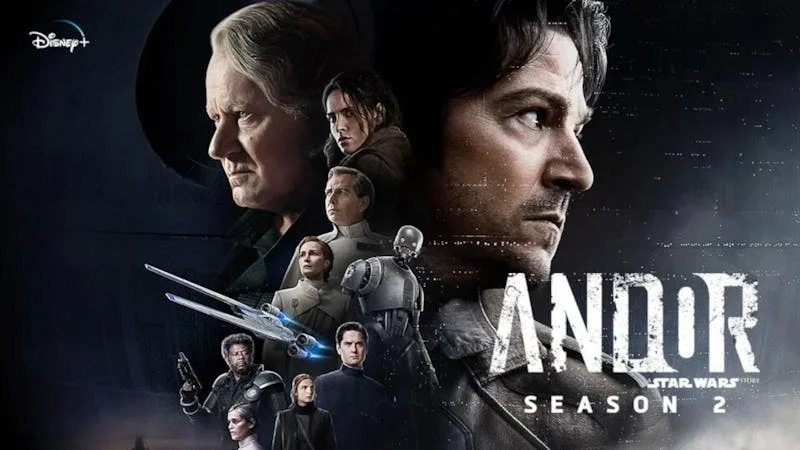
Andor is not trying to be a space opera in the familiar sense. The two-season series, a prequel to the 2016 film Rogue One, follows Cassian Andor, Mon Mothma, Dedra Meero and Luthen Rael through a story that functions as a political thriller, with functionally zero fantasy and hardly any science fiction present in the series whatsoever.
That choice gives the show its force. Cassian begins as a common thief, not a hero, and is progressively radicalized by the pain the Empire inflicts on him and those closest to him until he joins Luthen Rael's quietly growing galactic resistance. Mon Mothma moves through the story as a rebel-sympathizing imperial aristocrat, while Dedra Meero operates as a Gestapo-esque administrator, the sort of bureaucratic enforcer who turns state power into a daily pressure on ordinary lives. The result is a series that asks viewers to sit with how people are pushed into opposition, not how they are born to it.
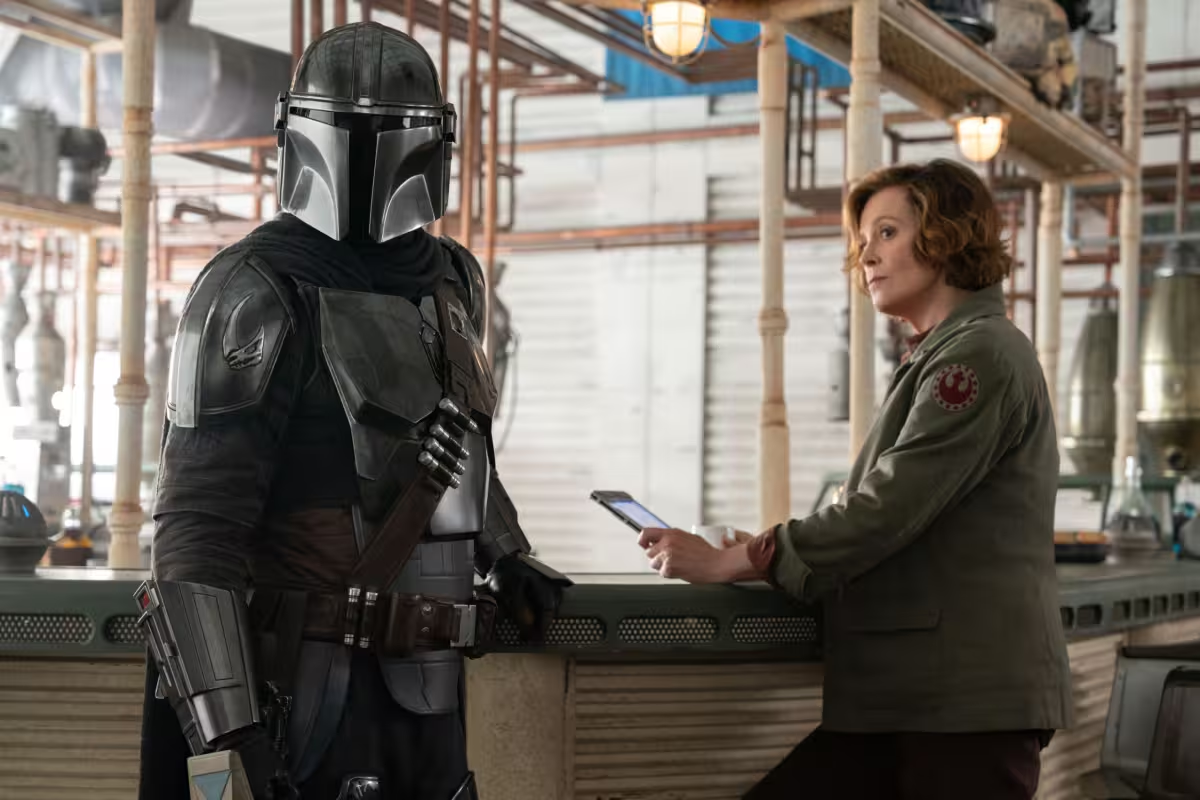
That matters now because Star Wars turns 50 next year, and the franchise that began with George Lucas's A New Hope in 1977 is being revisited at a moment when distrust of institutions has become part of the civic weather. The comparison is not subtle. Andor lands in a political climate that can feel close to the one surrounding A New Hope, except the modern anxieties are drawn from a different stack of scars: published the first excerpts of the Pentagon Papers in 1971, Richard Nixon resigned in 1974 amid the Watergate scandal, and the government’s own conduct has since produced repeated waves of suspicion.
Recent history has only hardened that mood. The U.S. Department of Justice conducted the incremental release of the Epstein Files in 2025, with hundreds of thousands of documents tied to Jeffrey Epstein’s connections to wealthy elites in the United States and abroad, while President Donald Trump’s reversal against his own party’s demands for transparency in the matter outraged Americans seeking the truth on both sides of the aisle. Against that backdrop, a story about an empire that lies, grinds people down and radicalizes its enemies feels less like escape than recognition.
Andor also arrives after two long American military endings that still frame public memory. America abandoned Vietnam in 1975 and Afghanistan in 2021, and the two entanglements together spanned 40 years. That is the deeper reason the series works as more than a genre exercise: it understands that empires do not only fall in fire. Sometimes they decay through paperwork, fear and the slow erosion of trust. If Andor is the most political Star Wars story yet, it is because it treats rebellion not as destiny but as a response to pressure the state creates itself.
