


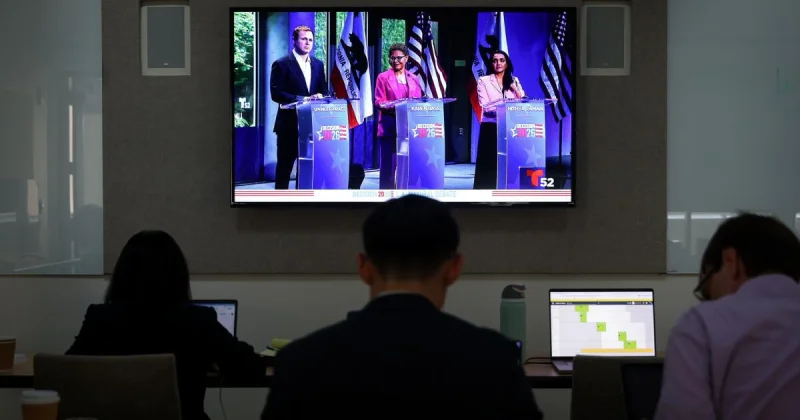
Spencer Pratt has made Los Angeles Mayor Karen Bass a target in a 30-second smartphone video that blames her for the Palisades fire and for a homeless crisis he says led to a sudden outbreak of typhus. The clip, released in April, has drawn more than 13 million views and pushed a celebrity-heavy race further toward the kind of viral politics that now shapes campaigns across the city.
Bass is answering with a more traditional operation, one powered by money, paid media and a steady stream of digital posts. She has raised more than any other candidate and is sitting on a war chest of nearly $4 million, including public matching funds, while her ads have been running on streaming platforms, social media and television, including Jeopardy, Wheel of Fortune, the NBA semifinals and other telecasts, according to FCC filings. Neither Pratt nor City Councilmember Nithya Raman had spent on a television ad on Los Angeles’ top local stations in those filings.
The race matters now because Los Angeles is headed for its June 2 primary election, and the way candidates are reaching voters looks different from the old mayoral playbook. TV used to dominate these contests, but this year the fight for attention is moving online, where a short clip can travel farther than a paid commercial and where personality can matter as much as policy. Raman has leaned into that shift with an influencer-style video and a tiny microphone to explain her campaign positions, while Bass has been posting on Instagram and pushing ads where people are already watching shows and scrolling feeds.

That does not mean Bass is outspent or overshadowed. Her campaign has raised less money than it did in her 2022 run, but it still has more cash on hand than any rival. Alex Stack, her spokesperson, pointed to that earlier election to argue the money gap is not new, saying, “Caruso outspent us 11 to 1 and we still won,” and adding, “This time it’s a bigger field. … We’re ru”. The quote was left unfinished in the material provided, but the point was clear: Bass is betting that the same ground game and media strategy can hold up again, even as the field grows noisier.
Pratt’s reach says as much about the moment as it does about him. His fame from The Hills and other reality TV appearances helped the video spread, and that kind of instant recognition is now part of the campaign itself. Mike Trujillo said of his on-camera approach, “It’s just second nature. So you’re seeing him lean into things he already knows a little better.” Sara Sadhwani described the shift more broadly: “This is the new era of campaigning,” she said, adding that social media has changed how candidates connect with voters online. The last mayoral race had its own expensive media arms race, but this one is being fought in a feed, and Bass is trying to make sure her message reaches voters before the viral clips do.
For Bass, the next test is not whether she can win the internet for a day. It is whether her heavier, more conventional spending can still persuade enough Los Angeles voters by June 2 to matter more than the noise around her.
