


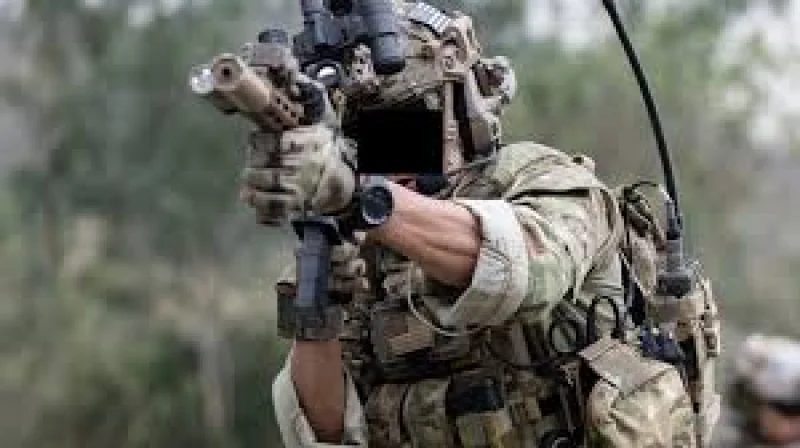
Retired Navy SEAL Andy Stumpf said the standards for combat at Seal Team 6 were “simply insane” as he discussed the Iran conflict and his new book on Fox & Friends. Stumpf, a former member of SEAL Team 6, used the appearance to argue that the same habits that keep elite operators alive can also help ordinary people take control of their futures.
He said understanding failure and preparing with precision can help anyone take agency over what happens next. That message was the backbone of his conversation about Drownproof: Eight Life Lessons to Keep Your Head Above Water, a book built around lessons from his own 17-year career.
The weight behind that advice comes from the unit itself. SEAL Team 6, known internally as DEVGRU, is the Navy’s Tier One counterterrorism, direct action and hostage rescue unit, and its missions are among the most sensitive in the military because failure is not an option. The unit is the Navy’s counterpart to Delta Force and is best known publicly for killing Usama bin Laden in 2011 in a raid deep into Pakistan.
The pipeline to reach that level is grueling, but the standards do not ease once an operator joins. Former SEAL Team 6 operator DJ Shipley said in a separate interview that there are no do-overs in combat and no second chances when the call comes. “There’s no warm up. There’s no mulligan,” he said, adding that he plays every mission as if it is “the last game I’ll ever play in my life.”
Shipley said the culture pushed everyone to be better than him, and that his job in combat was to read a teammate’s future and thought process from body language alone. He described a scene of grenades going off, people getting shot, people screaming and dogs barking, saying he had to look down a hallway from 30 feet away and know exactly what the teammate would do next.
That intensity is the point. Tier One operators are expected to excel in every part of the job, and the article says the security of the nation depends on that kind of precision. It also notes that Tier One operators are in a league of their own when it comes to direct action and hostage rescue, a standard that helps explain why their name still carries such weight long after the mission is over.
The tension in the story is that the same discipline built for the most dangerous missions is being translated into everyday advice for readers who will never go to war. Stumpf’s argument is that failure, preparation and accountability are not just military virtues. They are habits that can shape how anyone works, decides and recovers when the pressure is on.
What comes next is less about the battlefield than the lesson being drawn from it. Stumpf is using the authority of a 17-year career in one of the most demanding units in the military to make a broader case: the people who prepare best are often the ones who are ready for what comes without warning.
