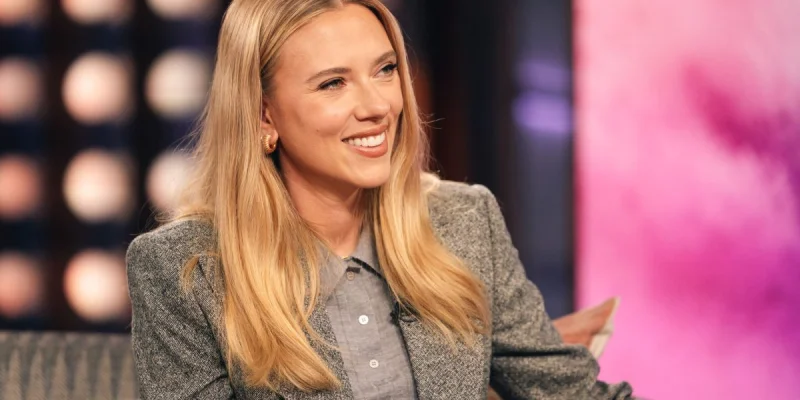
Scarlett Johansson says the first step toward work-life balance may be admitting that it does not really exist. In a new interview with CBS Sunday Morning, the actor said there will almost always be a deficit somewhere, whether at work or at home.
“I think actually admitting that there is no work-life balance is the first step to getting there in a way because it’s just not possible,” Johansson said. She added that she has learned to be kinder to herself because “you can’t do all of these things all the time,” and said the question she keeps coming back to is, “Is it good enough?”
The comments land with particular weight because Johansson is living several lives at once. She has two children, born in 2014 and 2021, has launched a skincare brand, and remains one of the best-paid actors in Hollywood. Forbes ranked her the fourth-highest paid actor in 2025, behind Adam Sandler, Tom Cruise and Mark Wahlberg, while Celebrity Net Worth puts her wealth at about $165 million.
Johansson’s view of success has shifted as her responsibilities have grown. She said success as a parent is not perfection, but doing what is right even when it does not make her the most popular choice. “Somebody once told me, ‘If you’re successful as a parent like 75% of the time, that’s good—if you’re doing 75% of it like right, then you’re winning, which is probably true,” she said. For a woman whose career has stretched from early roles to global stardom, the point is less about balance than triage.
That outlook helps explain why the conversation around Johansson has followed the same fault line for years: whether a life that includes blockbuster films, business ventures and parenthood can ever be neatly managed. She grew up in Manhattan in a family of six, began acting by age nine and landed her first role in Rob Reiner’s 1994 comedy North. She later starred in Lost in Translation, Marriage Story and Marvel films that culminated in the 2021 standalone Black Widow, while also publicly supporting feminism and women’s rights and canvassing against the reelection of President Donald Trump.
Her career has not been without conflict. In 2024, Johansson publicly accused OpenAI and chief executive Sam Altman of using a chatbot voice that sounded similar to her own after she declined to take part in the project. That episode underscored how closely her public image is tied not just to her work, but to questions of control over it.
Johansson’s comments also echo a broader argument playing out well beyond Hollywood. Emma Watson said last year on the On Purpose podcast that making films is so demanding that having a separate life alongside it is “almost impossible,” while entrepreneur Emma Grede has argued that extraordinary success requires extraordinary effort. Johansson is not rejecting ambition. She is describing its cost. And in her telling, the answer is not perfect balance, but a standard low enough to survive real life: good enough, most of the time.