


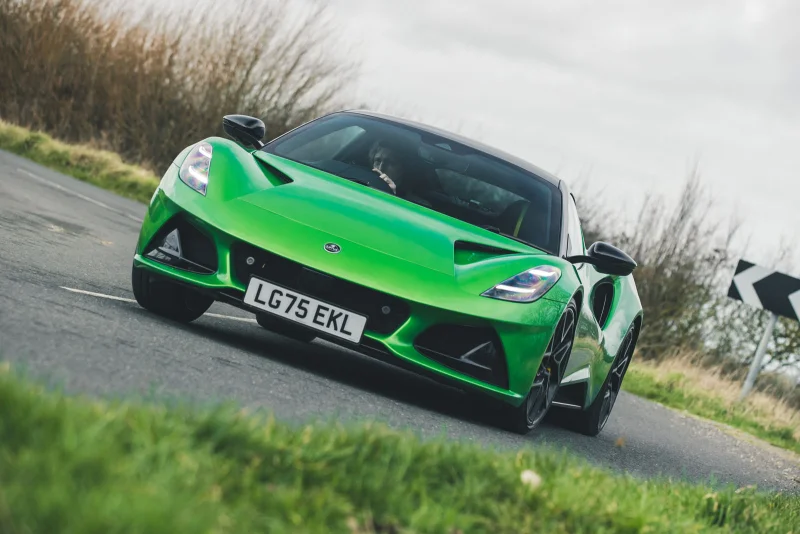
Lotus will replace the Emira's current engines with a new 3.0-litre V6 turbocharged hybrid unit from Horse when the revised sports car arrives in 2027, giving the model a 536bhp boost and ending the use of both its Toyota-sourced V6 and AMG-built four-cylinder option.
The new powertrain develops 516lb ft and weighs 160kg, and it is paired with a four-speed automatic transmission that includes an electric motor. Horse unveiled the engine at the Beijing motor show last month, describing it as a powerful and lightweight V6 for mild- and full-hybrid vehicles. For Lotus, it is also the clearest sign yet that the Emira will stay at the heart of the brand's sports-car line-up for years to come.
The decision matters because Lotus had already extended the life of the Emira after concluding there was no market for the electric replacement it had planned alongside Alpine. The company also had to move on from the Toyota V6 because it would not have met upcoming changes to EU regulations. That left Lotus searching for a powertrain that could keep the car relevant in Europe while still matching what buyers wanted in its biggest export market.
Feng Qingfeng, Lotus's chief executive, said US reaction played a major role in the call to keep the six-cylinder car alive. He said customers there told the company they loved the V6 and that the V6 version is Lotus's best-seller in the US market. Qingfeng also said the 10% tariff on UK-built cars exported to the US seemed acceptable and that using Hethel was more cost-efficient than building a new factory.
That factory is Lotus's historic site at Hethel, near Norwich, which is also due to build the V8 Esprit supercar from 2028. The plant had fallen to as few as 2,000 cars last year after the US imposed a 25% tariff on imported cars in March 2025, a blow that fed doubts about the site's future. The tariff was later cut to 10%, helping revive production and making Hethel attractive again for US supply. Lotus now wants to push the plant close to its 10,000-car capacity with output from both the new Emira and the Esprit.
Matias Giannini, chief executive of Horse, said the engine's small size is central to its design, calling it the lightest and smallest hybrid V6 in the world right now and saying there is no hybrid V6 that fits the same package. For Lotus, that packaging matters as much as raw output. The current Emira, launched in 2021 on a heavily modified version of the outgoing Evora platform, has become the company's best-selling sports car on annual figures, and the 2027 update is meant to keep that momentum alive without forcing Lotus into a costly reset. The question now is whether the combination of a hybrid six-cylinder Emira and a V8 Esprit can turn Hethel from a site once under threat into the center of Lotus's next phase.
