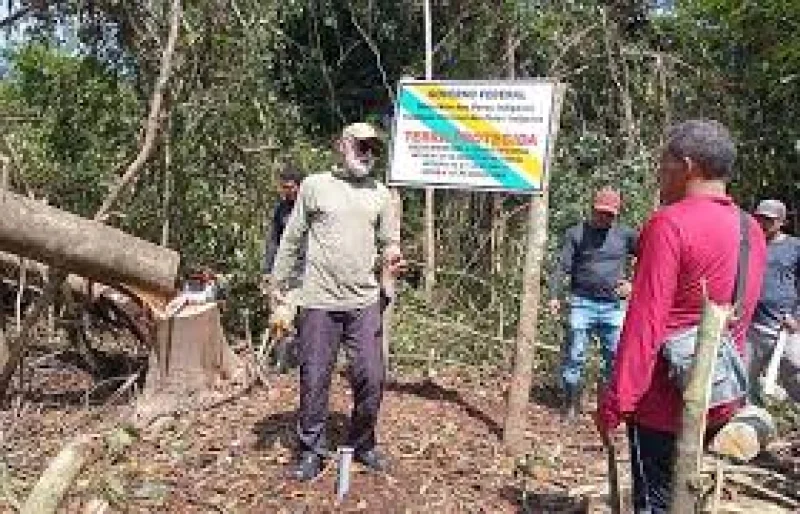
Brazil has begun demarcating the Pardo River Kawahiva Indigenous territory, a 410,000-hectare stretch of Amazon land in the north-west of the country that officials say is meant to shield the community from farming, illegal mining and logging. The territory lies between Mato Grosso and Amazonas, and the move marks the start of a process that took 27 years to reach this point.
The land is home to about 290 Kawahiva people, one of the Amazon’s most vulnerable nomadic hunter-gatherer communities. Their existence was first proven by specialists in 1999, but the go-ahead for demarcation only came after years of pressure, repeated legal challenges and a cycle of delays driven by agribusiness-linked groups seeking to stall the measure.
The announcement last week by the National Indigenous Peoples’ Foundation, known as Funai, set the stage for the current step. Funai is responsible for environmental reserves that cover about 14% of Brazil’s national territory, and Indigenous lands have recorded the lowest rates of deforestation in the Amazon in recent years. Beto Marubo, a leader with the Union of Indigenous Peoples of the Javari Valley, said Funai should be valued by Brazil as the body responsible for about 14% of the national territory, and he pointed to the Kawahiva land as an example of a region that has faced very high levels of rural violence without suffering any deforestation for two years.
The territory has long sat under pressure from armed groups linked to the expansion of farming, land grabs, illegal logging and mining. Renan Sotto Mayor, a lawyer with the Brazilian Human Rights and Peoples’ Rights Network, said the entire region where the Pardo River Kawahiva people live is under pressure from a clear push to expand the agricultural frontier, adding that there is a great deal of economic interest in the area. That combination of legal, political, economic and logistical obstacles explains why a protection that should have been routine for an isolated community took nearly three decades to begin.
Funai said it was also planning buffer zones around the territory to prevent environmental degradation at its edges, a sign that the government sees the threat as broader than the surveyed land itself. Elias Bigui, a human rights defender from the Dignity Rights Collective, said there had already been a massacre of landless workers inside the territory, along with other deaths linked to land disputes, and argued that Funai’s workforce needs to be strengthened so it can protect isolated Indigenous peoples. For the Kawahiva, the demarcation is not the end of the fight, but the first real line of defense after a generation of waiting.