


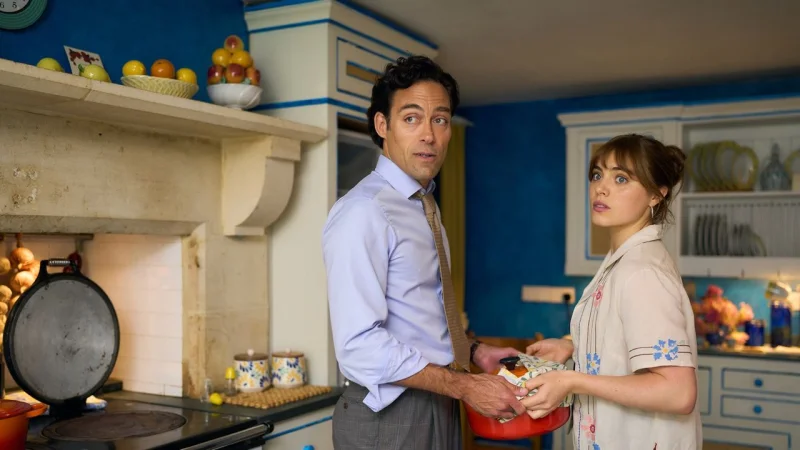
Victoria Smurfit is back in the thick of it in season two of Rivals, playing Maud as the story hurtles toward the 1987 general election and the battle to secure the Central South West television franchise. The review calls the new run a tremendous second season, and it makes the case that the series remains as outrageous, shiny and shamelessly entertaining as ever.
That is a big claim in a show built on excess, but it lands because the cast leans into the chaos. Aidan Turner appears as Declan O'Hara, while Rupert Campbell-Black is still the minister for sport and, in the show's own logic, the most handsome man in England. He is also the sort of man who can bark, “ARE YOU READY FOR ME TO COME DOWN YOUR CHIMNEY?” and make the line sound like part threat, part invitation.
The story world is set in the 1980s, when Jilly Cooper's Rivals earned its reputation as an 80s bonkbuster, and the second season keeps that spirit intact. The review frames the adaptation as an unapologetically preposterous and glamorous escapist comedy-drama, which is exactly why the franchise fight matters inside the show: the characters are not just competing for power, they are competing for status, sex appeal and control of the room.
There is also the kind of detail that only a series this gleefully unhinged would include. Rupert has a love-cottage in Devon, where Cameron Cook hides from Tony Baddingham, and the review points to an unexplained closeup of a dancing sheepdog as proof that the production has no interest in behaving itself. Even the dialogue plays like a dare. “The man is a loose cannon,” Rupert Everett says of one character, while Cameron answers “Thank you,” and Rupert fires back, “Plenty more where that came from,” as if the whole thing were a party where nobody has any intention of going home.
That is why the second season matters today: it is not trying to modernize Rivals into something tidier or less ridiculous. It is doubling down on the things that made the story work in the first place, and Victoria Smurfit is part of that push. Maud does not arrive in a sober drama about media ownership; she arrives in a world of vanity, scheming and spectacle, just as the election and the franchise race tighten the stakes. If the first season sold the fantasy, season two appears to have understood the assignment and turned the volume up.
For viewers, the question is no longer whether Rivals can survive its own excess. The review suggests it thrives on it, and that Smurfit's presence helps keep the mayhem moving with enough confidence to make the whole thing watchable to the end.
