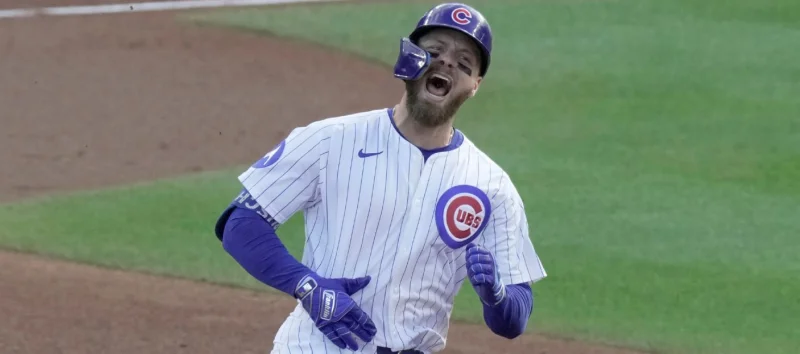
Trea Turner has not looked like vintage Trea Turner so far in 2026, and the numbers are dragging the conversation with them. He is hitting.235, the worst batting average of his career, yet he is still pacing toward a 15-homer, 21-steal season that keeps him squarely in the middle of fantasy debate.
That was the frame around a buy-low discussion that treated Turner less like a collapse and more like a player in the middle of a bad stretch. Joey said Turner’s finish closer to a.270 batting average feels more realistic by the end of the year, and the point was that his true talent level still looks closer to what he showed in 2025 than to what managers are seeing now.
The case for patience is built on history as much as projection. Turner has had prolonged slumps during his time in Philadelphia before, and the reminder matters because it changes how a slow April and early May should be read. The conversation also acknowledged a harder possibility: Turner could be entering the gradual decline phase of his career as a speed-first player entering his 30s, which would make every cold streak feel a little more permanent than the last one.
Even so, the buy-low argument does not rest on hope alone. Joey referenced Turner’s previous expected batting average marks and argued that a finish closer to the.270 range feels much more realistic by the end of the year. That is the part fantasy managers care about now, because the gap between a.235 start and a.270 finish can decide whether he remains a premium piece or slips into the category of a player best used as a trade chip.

Michael Busch came up in the same discussion for a different reason. He entered May with an ugly batting average, but he has hit.315 during May, and Welsh pointed to a rolling expected wOBA jump over Busch’s last 100 plate appearances as the stronger signal behind the improvement.
By mid-May, Welsh said Busch’s expected wOBA had climbed from below league average to well above it, and the supporting details lined up with that move. Busch has been making quality contact, his strikeout rate has not spiked, and some of his power indicators are beginning to recover. In a fantasy market that often chases whatever is loudest on the surface, that kind of profile can still matter more than the batting average next to a name.
That is why Busch was singled out as a possible target even with a rough start. Welsh said the slow opening may still leave him obtainable as a secondary piece in larger deals, which turns a bad first month into an opportunity for managers willing to look past the line score.
For Turner, the question is whether the early damage is just another Philadelphia slump or the first clear sign that the player fantasy managers remember is slipping away. For Busch, the question is simpler: whether the market has already priced in a weak start that his underlying numbers are starting to erase.