Dan Hicks died suddenly from an acute illness at 64, and the news landed with the shock of losing a voice many sports fans thought would be there for years to come. Hannah Storm announced his death on Nov. 12 and said he was a devoted husband of more than 30 years, a loving father to their three daughters and a cherished friend to many.
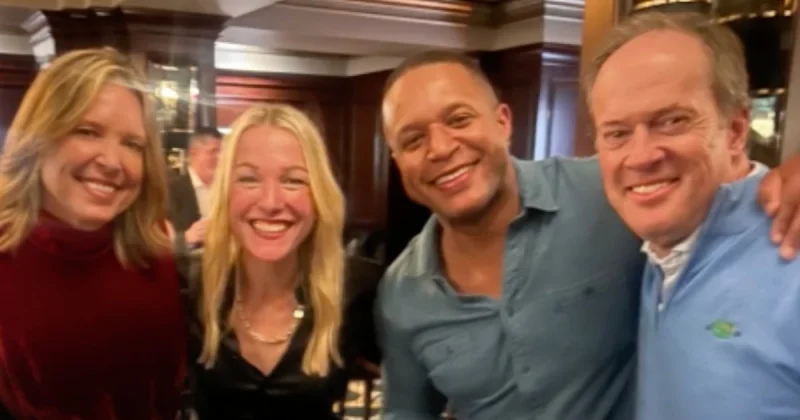
For those who knew him on and off the air, the loss was personal as well as professional. Craig Melvin said he and Lindsay Czarniak had become part of Hicks' family, adding that they had just had dinner with him and saw him a few weeks earlier at a charity event. He shared a photo of the four of them at the 2025 Rose Bowl in California and said Hicks would be sorely missed.

The outpouring came fast because Hicks was not just another familiar broadcaster. He spent 34 years with NBC Sports and became the voice of Olympic swimming and skiing, Notre Dame football and the PGA Tour. In a joint tribute posted on Nov. 12, Melvin and Czarniak called him simply the best and said he always seemed genuinely happy, excited to see people and easy to talk to, even in high-stakes sports moments when his calls carried the weight of the event.
That contrast is what makes his death feel especially hard to absorb. Hicks seemed to bring the same calm, upbeat presence whether he was calling one of 16 Olympics, a PGA event or a college football game, and colleagues said that warmth never felt performative. Mike Tirico said he could not think of a big moment when Hicks did not have the right call, the right energy and the right words, while Jimmy Roberts said he was saddened that Hicks was not there to hear the praise he deserved.
Rowdy Gaines, who called eight Games alongside Hicks, also reflected the closeness that built over decades of work. Hicks had begun as a play-by-play announcer in 1992, and the tributes now underline the same point from every direction: the loss was sudden, the illness was acute, and the gap he leaves behind is immediate. What remains unanswered is the illness itself, but the scale of the reaction already says how widely he was valued and how quickly that absence will be felt.