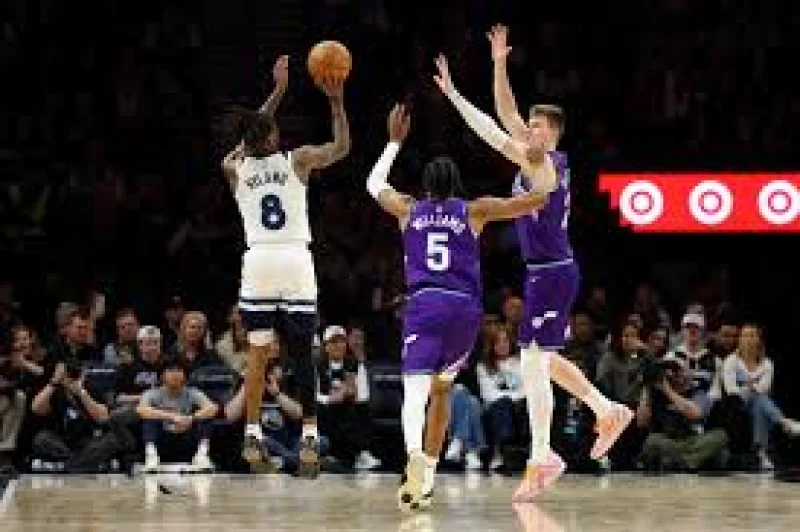
The Minnesota Timberwolves came home Tuesday to face the Utah Jazz with a three-game win streak intact and an eight-game run of games in Minnesota beginning the same night. It was the kind of early-season stretch that can settle a team’s rhythm fast, and Minnesota entered it looking for a fourth straight victory.
That is why the matchup drew attention beyond the standings. The Jazz had won only one game, sat 29th in offensive rating and 23rd in defensive rating, and were giving up more than 17 turnovers a night. Minnesota, by contrast, had built its start on a top-three defense and a top-10 turnover game, two things that tend to travel even when the shots do not fall perfectly.
Joan Beringer was part of the reason the game had an extra layer of interest. He left the game against the New Orleans Pelicans with a nasal fracture, and there was still a path for him to return against the Jazz wearing a protective mask. For a Minnesota team trying to keep its edge during a long home stand, that kind of return would matter even if it came with limits.

The Timberwolves were still doing this without Anthony Edwards, Donte DiVincenzo and TJ Shannon Jr., all listed out, which made the run more revealing than the record alone suggested. They had been able to win and defend anyway, and they had worked to keep their aggression late in games when opponents looked tired. That has been a useful formula, but it also leaves little margin if the offense stalls.
Utah brought a different problem into the night. In the years since trading Donovan Mitchell and Rudy Gobert to the Minnesota Timberwolves and the Cleveland Cavaliers, the Jazz had been trying to lose games and improve their lottery odds, but the organization has also been trying to see whether its younger pieces can grow into something sturdier. The issue has been that the promise has not yet matched the results.
Keyonte George and Darryn Peterson had not yet found real harmony as Utah’s starting guards, and Will Hardy had already been splitting them up with a mix of starters and bench players. That is usually the move of a coach searching for balance rather than insisting on a fixed look, and it said plenty about where the Jazz were even before the ball tipped. The other end of the floor was not cleaner either: Utah was top five in defensive rebounds, but still struggled to recover its own misses, a sign of a team that can survive a possession and then fail to finish it. For Minnesota, the next question was not whether the start had been good. It was whether the homestand could turn a strong beginning into a real separation, with Beringer’s status and the missing scorers still shaping what the Wolves can become at home.