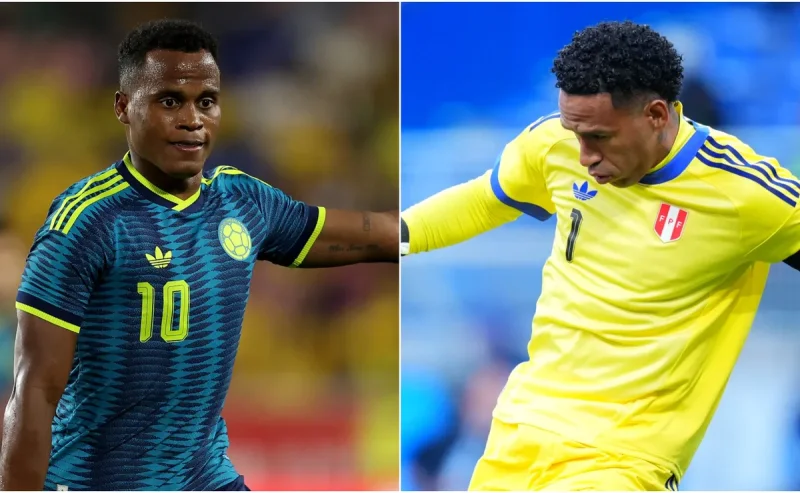
Colombia and Peru will meet in a friendly on October 6, with the game set for 6:45 pm Colombia time at NU Stadium in Miami, United States. It is a match built around change rather than certainty, with both teams arriving after defeats and using the night to look at new combinations.
The search interest is obvious because this is not being framed as a routine exhibition. Colombia is coming off a loss to Paraguay, Peru from a defeat to Canada, and each side is treating the meeting as a final international-break outing after the 2026 World Cup. For readers tracking Colombia Vs Peru, the key question is not only who wins, but who gets minutes in a match that sits inside a larger reset toward the 2028 Copa America in the United States.
For Colombia, Jhon Arias is anchoring the attack while Nestor Lorenzo uses the game to test fresh talent. Davinson Sanchez is starting and wearing the captain's armband, a clear sign that the side is leaning on structure even as it experiments. The move also reflects a deeper transition: James Rodriguez and Juan Fernando Quintero have already retired from international soccer, leaving Colombia to rebuild parts of its spine while still trying to stay sharp.
Peru is approaching the same date with a different kind of shuffle. Pedro Gallese is leading the squad from goal, Yoshimar Yotun is in central midfield and Mano Menezes is using the tune-up to experiment with new lineups. Paolo Guerrero is also out of the picture after retiring from his international career, which adds to the sense that La Bicolor is in a turnover phase rather than a settled one.
The one wrinkle is Oliver Sonne. He is not starting at right back for Peru, and he was called back to England after the defeat against Canada. That leaves Peru trying to test its shape and personnel at the same time, which is exactly the sort of contradiction that makes a friendly worth watching: the team wants experimentation, but one of the players who might have helped that process is no longer in the lineup mix.
That is why this game matters beyond the scoreline. Colombia and Peru are not merely filling a date on the calendar in Miami; they are measuring what survives from the post-2026 World Cup reset and what still needs to be rebuilt before World Cup qualifying and the next major cycle. By the time the whistle goes on October 6, the real story will be which new pieces can hold their shape when the match stops being theoretical.