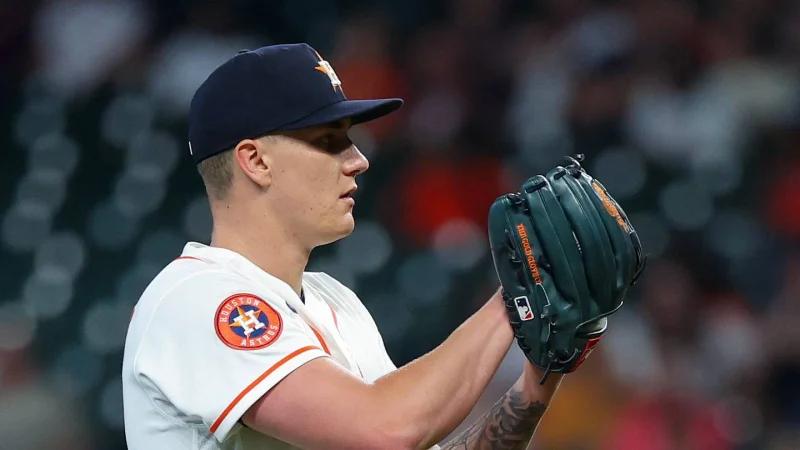
The Houston Astros opened a crucial three-game set against the Kansas City Royals on Tuesday at Daikin Park, and the spotlight fell on Hunter Brown from the first pitch. Brown started for the Astros against Michael Wacha as the clubs began a series that could shape the next turn of the race.
That is why this matchup is being watched now. Brown entered at 5-3 with a 3.52 ERA, but he was coming off a start in which he gave up five runs, four earned, against the Phillies. Wacha brought a 9-8 record and a 3.25 ERA, and he had been even sharper since the start of August with a 2.44 ERA and a 4-0 record. He also led the league in batters faced with 736, a sign of how often Kansas City has asked him to work deep into games.

The game also put a pair of lineup choices under a tighter lens. Jeremy Pena led off for the Astros even though he had a.513 OPS and a.168 average since Aug. 4, while Yordan Alvarez hit second after putting up a.710 OPS in September with one home run and a.206 batting average. Alvarez still led in batting average and owned a 1.159 OPS at Daikin Park, which is part of why Kansas City had to account for him early in the order.
Brown, though, was asked to carry the opener despite a number that stood out in the wrong direction: an 8.82 ERA against the Royals in his career, his worst against any opponent. Salvador Perez and Bobby Witt Jr. had already done damage against him, each with a home run and an OPS over 1.000, which made the matchup more than a routine start. Brown’s career splits offered some reason for hope, with a 3.23 road ERA and a 3.77 home ERA, but Tuesday was about whether those numbers could matter more than the history against Kansas City.
Alvarez added another layer to the night because he had homered off Wacha in seven at bats and trailed Junior Caminero by two home runs and Pete Alonso by four RBI in the triple crown chase. That left the Astros with more than a series opener to manage; they needed Brown to quiet a lineup that had already found him before, and they needed the top of their order to turn recent form into runs. The rest of the three-game set now carries the question that matters most: whether Houston’s rotation can hold up long enough to make this series feel like a turning point instead of a warning.