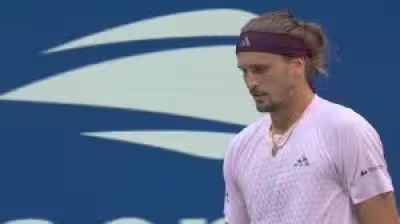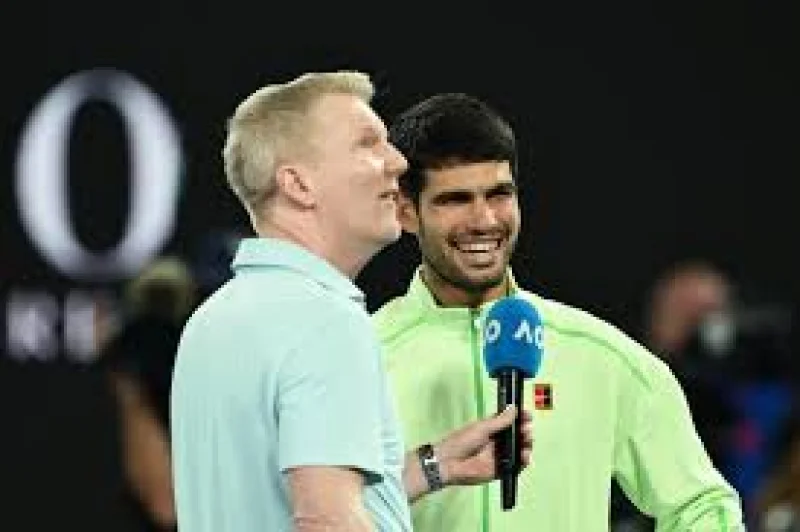
Jim Courier says his job as a broadcaster starts before the first ball is struck. The former world No. 1 and four-time major champion said he keeps notes on every player, then sorts the notes for the two players about to meet so he can walk into the match with a plan.
He was talking on Monday at the Open about how he sees tennis for Tennis Channel and TNT, and why that work is different from playing the sport. Courier said he tries to be the eyes and ears for fans at home, looking for the reason something is happening rather than just describing what has already happened.
That makes the match less about reciting familiar lines and more about solving a problem in real time. Courier described himself as a puzzle solver, someone who has to be a generalist instead of a specialist, step out of his own body and look at the court from 10,000 feet. The point, he said, is to be more observational and less myopic.
His notes are organized around the matchup itself. He does not just stack up facts about each player in isolation; he groups the material so he can compare how one player’s strengths, habits and patterns might run into the other’s. That matters because the questions broadcasters ask are not always the same as the questions players ask. A player thinks about how he would handle an opponent using his own game. A broadcaster has to think about how the two games interact.
Courier said the first thing he watches depends on how a match begins. If it starts slowly, he wants to set the stage early in the set, so viewers understand the conditions, the pace and the shape of the contest before the scoreline gets away from them. If the opening games are full of breaks of serve, the job changes again: the focus shifts to why the serve is under pressure and what is driving the volatility.
That approach reflects how tennis broadcasting has changed. Analysts are no longer stuck repeating tropes and cliches, and recent coverage has leaned harder into detailed observation. Recently retired players such as Andrea Petkovic and Chris Eubanks have added fresh voices, while Andre Agassi and Andy Roddick have been used to talk through stroke production and point patterns. Tennis Channel, TNT and have all invested in that deeper style of analysis.
Courier seems built for it. He talks about conditions, technique, tactics and fitness as pieces of the same puzzle, and his own description of the work suggests why viewers have started expecting more than a simple call of the score. The one thing he did not spell out was the next match on his schedule, which leaves his preparation method as the real story: a broadcaster walking in with detailed expectations, knowing the match will usually force him to abandon most of them and read the point in front of him instead.