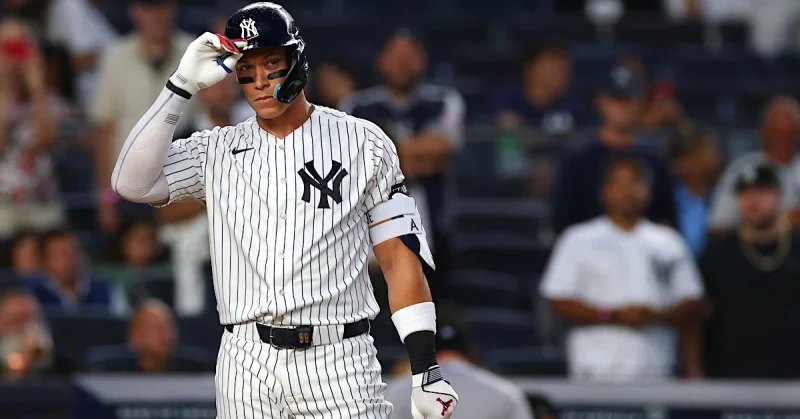
Aaron Judge was back in the Yankees lineup on Monday, ending a stretch of more than three months on the IL, but his return did not look like the kind that changes a game by itself. He went 0-for-3 with two strikeouts as the Yankees beat the Rockies.
The Yankees chose to activate Judge without a rehab assignment, a sign they believed his bat was important enough to use right away. That was the point of the move: not to ease him in, but to get him back into a lineup that had been missing him since early June.
The result, though, showed how much was being asked of one player. Judge struck out on fastballs from Gabriel Hughes and Mark Manfredi, and his only ball in play was a routine fly out to Cole Carrigg. He was pulled after the sixth inning for Heliot Ramos, who later hit a three-run homer that proved decisive. The Yankees still won, but Judge’s night was a reminder that return and recovery are not the same thing.

That is why Judge mattered so much before he even stepped into the box. With him out, the Yankees had posted a 90 wRC+ and ranked 26th in runs scored, numbers that would usually drag a club down rather than keep it in the race. They had kept winning anyway because of superb pitching, but the offense had been carrying a smaller load than the team wanted for months.
The timing also sharpened the stakes. The Yankees were four games behind the Tampa Bay Rays in the AL East, and the gap was, for all intents and purposes, a five-game lead. Their best chance to improve their postseason position was to win the AL East and secure a first-round bye, which would put them in a better spot to chase the World Series. Judge’s return was supposed to help that push immediately, even if Monday showed he was still working back into rhythm after the rib injury that sent him to the IL in early June.
For the Yankees, the next test is not whether Judge can wear the uniform again. It is whether his presence turns those narrow margins in the AL East into something they can actually close.