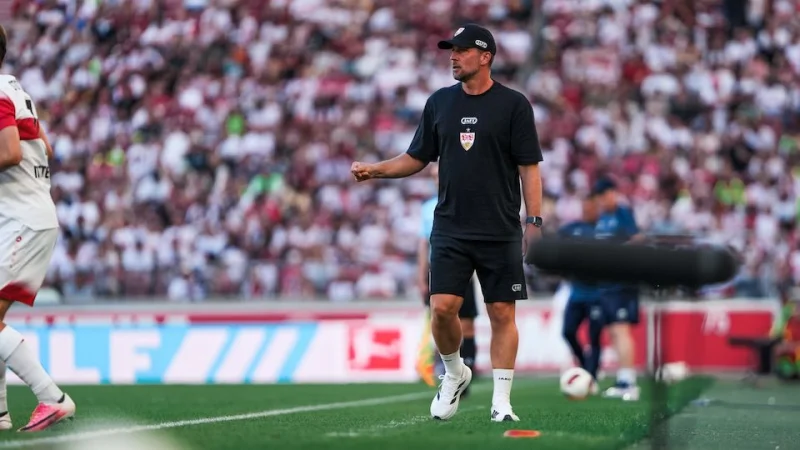
Stuttgart came out sharp against Cologne and spent the opening phase on the front foot, but the finish they wanted never arrived. The crossbar stopped them more than once, and Marvin Schwabe also kept Denis Undav out as Stuttgart tried to turn a fast start into an early lead.
That response mattered after Stuttgart were beaten 5-1 by Bayern Munich on matchday one, and Sebastian Hoeness made clear he wanted something different here. He changed the shape from a 3-4-3 to a 4-4-2 and made two changes to his side, bringing in Bilal El Khannouss and Chris Fuhrich for Tiago Tomas and Ramon Hendriks.
The new shape gave Stuttgart a more direct look in possession, and the early chances followed. Dzenan Pejcinovic, signed earlier in the summer from Wolfsburg, sent one effort from the edge of the area over the bar. Josh Vagnoman then found himself with a golden opportunity to put Stuttgart ahead, only for the move to break down at the final moment.

El Khannouss then delivered the kind of ball that should have changed the tone of the afternoon. His cross picked out a Stuttgart player, but the volley came back off the bar and into play, and Pejcinovic was denied again minutes later when his header struck the bar and stayed out. For Stuttgart, it was one of those spells when the attack looks alive but the scoreboard refuses to move.
Pejcinovic’s presence carried extra weight because of what he has already done in Stuttgart colors. Earlier in the summer, he scored a hat-trick on his debut in a 4-1 win over Hansa Rostock in the DFB-Pokal, which made him one of the names supporters were watching closely here. He could not repeat that kind of impact against Cologne, even as Stuttgart kept pressing.
Cologne had their own change on the left flank, with Linton Maina replacing Said El Mala, who missed the match because of illness. Maina, who had already come on in Cologne’s 3-2 win over Hoffenheim and assisted the second goal inside ten minutes, gave them a fresh outlet, but the early pressure belonged to Stuttgart. The live report did not include the final score, and that leaves the central question hanging: whether Stuttgart’s best first half of the new campaign finally became a result, or another reminder that control means little without a finish.