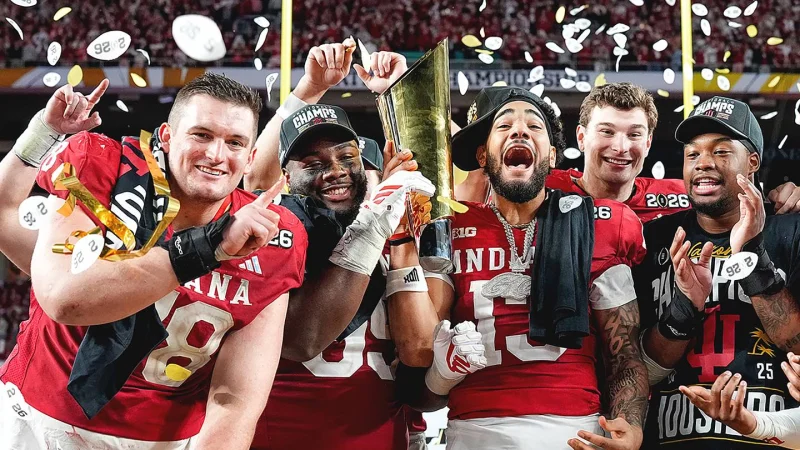
Indiana did something last year that college football still has not quite absorbed. A program that had been ignored for decades suddenly became a model, and Curt Cignetti was the man most people credit for making it happen.
That is why Indiana Football is back in the discussion now. The sport is trying to decide whether what happened in that unprecedented season was a one-off burst or proof that order can still be built in a game that has been shaken up by unlimited transfers, relentless boosters and the people who keep fighting over the rules. Cignetti has already forced that debate, and Fernando Mendoza has only sharpened it by arriving with a Heisman Trophy on the page and expectations that would have been unthinkable at Indiana a year ago.
The numbers help explain why the rise still feels so hard to believe. Indiana ranked 85th in 's returning production metrics the year before last year, then jumped to 44th last year and turned that base into a run described as unprecedented. The program went from the kind of team everyone had been ignoring for decades to an entirely dominant national champion instantly. That is the kind of leap that gets remembered because it seems to break the usual math of college football, where continuity is supposed to matter but rarely enough to explain a surge that sharp.

Other programs are now being measured against that possibility. 's 2026 continuity rankings put Notre Dame at No. 1, Texas at No. 6, Georgia at No. 8, Oregon at No. 11 and Texas Tech at No. 12, with Indiana all the way down at No. 52. That gap is the point. If continuity is the new currency, Indiana is either an outlier that proved the old rules can be bent or a warning that even the cleanest model can vanish as quickly as it appeared.
That is the friction no one around the sport can avoid. Indiana's lesson may be real, and Cignetti may indeed have seen something before everyone else did, but the same evidence can look foolish fast if the program falls back to earth. One quote from around the game captured that with blunt force: he saw the future, and he conjured order from the chaos in a way no one else could. If Indiana can live near that level again, the sport will keep treating the season as a turning point; if it cannot, the whole exercise becomes a beautiful accident.
So the question is narrower than whether Indiana was good. It is whether Cignetti built something durable enough to survive the sport that is supposed to break durable things, or whether last year's masterpiece will end up as the rare season that explains everything for a moment and then almost nothing at all.