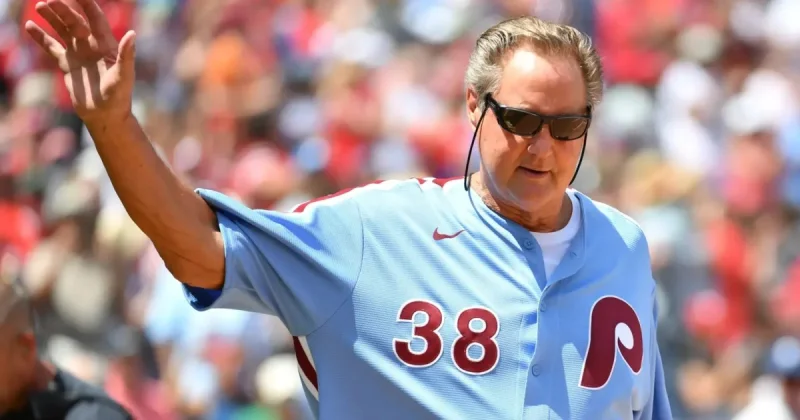
Larry Christenson, the Phillies pitcher who spent his entire 11-year major league career in Philadelphia, died on Friday at 72. He was the No. 3 overall pick in the 1972 MLB Draft and one of the faces of a franchise that first won the World Series in 1980.
For Phillies fans, Christenson’s name still lands because he was not just another arm from an old roster. He started 220 games for the team, the ninth-most in franchise history, finished 83-71 with a 3.79 ERA and was part of the club that finally reached the top. He debuted at 19 and, by 1977, had turned himself into a front-line starter with a career-best 19 wins and more than 200 innings, a workload he also cleared in 1978 and 1982.
That rise began after the Phillies took him out of Marysville High School in Washington, and it never left the same simple path for long. Christenson pitched six shutout innings in Game 3 of the NLCS against the Houston Astros, then helped the Phillies complete their march to the title. He also had one of the stranger nights in team memory on Sept. 5, 1976, when he struck out the New York Mets in 8 1/3 innings, allowed one run and hit two home runs in a 3-1 win, becoming one of only 66 pitchers to do that in a game they won.
The harder part of his story sat beside the numbers. Christenson’s career was repeatedly knocked off course by injuries, especially to his right elbow, where multiple surgeries robbed him of the chance to build on what he had already shown. He still finished as a Phillies-only major leaguer, and that matters in a sport where players move constantly and loyalty is usually spoken about more than lived.
Even the uniforms remember him. Christenson was the starter the first time the Phillies wore their all-burgundy Saturday Night Special look in 1979, a game they lost to the Montreal Expos, and he later wore that same jersey when he was introduced after the final game at Veterans Stadium in 2003. In a way, that fitting was the last image of a pitcher who carried the club through one era and into another. Now the unanswered question is not what he meant to the Phillies — the record already answers that — but how a career that bright could have looked if his elbow had held together.