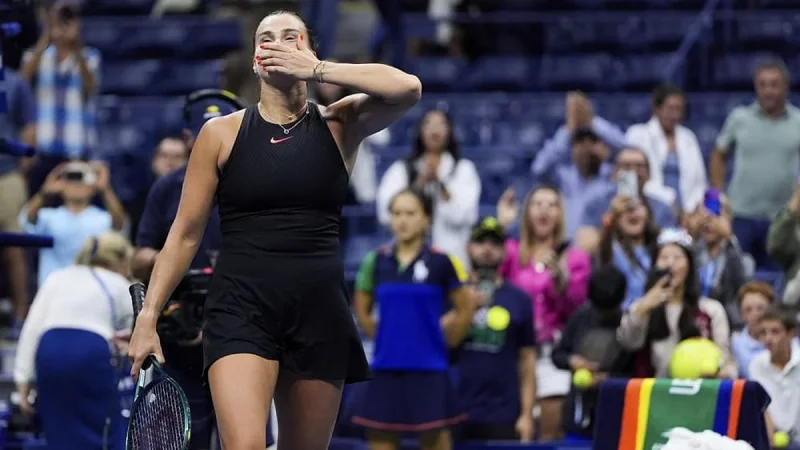
Aryna Sabalenka was set to meet Wang Xinyu in the third round of WTA Cincinnati, a matchup that put one of the event’s biggest names on a quick court built for first-strike tennis. At the Lindner Family Tennis Center, the pair were due to face a surface that punishes hesitation and rewards players who can land early blows and stay composed.
For readers following Wang Xinyu now, that pairing matters because the draw has reached the stage where form starts to count as much as reputation. WTA Cincinnati is the decisive crescendo of the North American hard-court summer and the last meaningful examination before the US Open, so every third-round match carries more than ordinary tournament weight.

The broader third-round picture showed how demanding this section of the draw had already become. Bouzkova moved on after beating qualifier Lucrezia Stefanini 6-2, 6-4, while Jovic advanced past Tamara Korpatsch after a season in which she reached a career-high ranking earlier this year. Kostyuk survived Sofia Kenin 4-6, 6-3, 7-5, and Stephens beat Anastasia Potapova in straight sets.
That set the stage for a test that looked straightforward on paper but left one important gap in the story: Wang had been placed into a match against a seeded favorite, yet the available context did not spell out the route she took to get there. Tjen’s 7-6, 5-7, 7-5 win over Viktorija Golubic — a match that lasted more than three hours and ranked among the longer women’s matches in recent Cincinnati history — showed how little room there was for error once the field reached this stage.
Sabalenka versus Wang was therefore less a routine third-round meeting than a checkpoint for both players. The match was the next confirmed step at WTA Cincinnati, and with the US Open approaching, the result would tell more than the bracket alone about who was handling the pace, pressure and precision the surface demanded.