


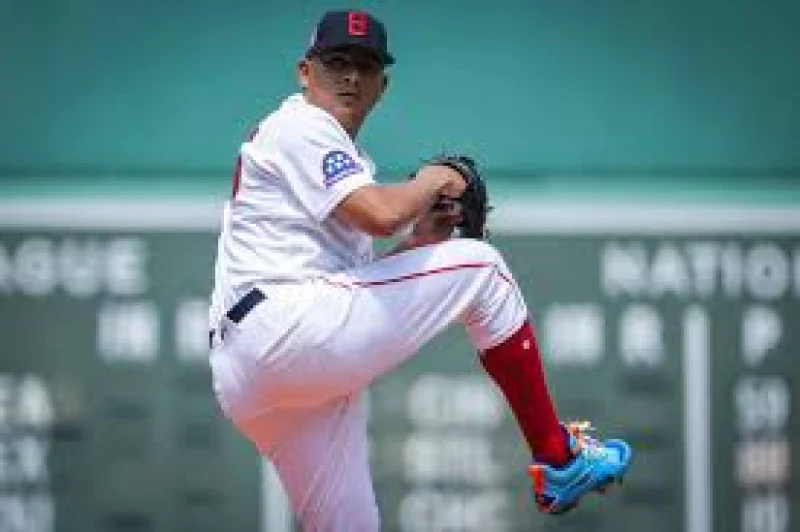
Chase Meidroth was in the White Sox starting lineup at second base on Thursday, and Chicago sent Luis Castillo to the mound for his first start since arriving from the Mariners at the trade deadline. The move came with the White Sox trying to steady themselves against a Red Sox team that had won seven straight.
For Chicago, the lineup card was the point. Meidroth was not just in the mix; he was penciled in at second base for a game that immediately carried weight because Boston entered Thursday on a seven-game run and had already beaten the White Sox 4-0 the day before.
Castillo was the other reason the game drew attention. He was making his first start for Chicago after being acquired from the Mariners at the deadline, and the veteran said the change was familiar territory: this was the sixth time he had been traded. “Different team, different jersey, but the same energy,” he said, adding that he saw a club that liked to fight, liked to compete, and was made up of hungry young players.
The matchup placed Chicago in a sharper context than the standings alone would suggest. The White Sox were 59-54, but they had dropped seven of their previous 12 games, while the Red Sox were rolling through a July in which they were 25-3 and had won nine series in a row. Boston also had homered in nine straight games, and Wilyer Abreu had just reached 20 homers after going deep Wednesday, including four homers over the last three games.
That is the friction inside the day: the White Sox were turning to a newly acquired starter and a young infielder while facing a Red Sox club that had not just been winning, but piling up enough offense and results to make each game feel like a test. Boston had shut out opponents 11 times this season, and Chicago had already been blanked for the eighth time this year. The gap in momentum was obvious before the first pitch.
Castillo’s own history against Boston did not suggest an easy reset. He was 2-3 with a 5.34 ERA in six career appearances, including five starts, against the Red Sox, but Thursday was about something simpler: whether the White Sox’s new pieces could change the shape of a game that had already tilted toward Boston before it began. Ranger Suarez was scheduled to start for the Red Sox, and his first career start against Chicago only sharpened the sense that both teams were arriving with something to prove.
For Meidroth, the question was immediate and narrow. The White Sox chose him at second base on a day when they needed a cleaner answer than the one they had shown on Wednesday, and the next step was not a theory but a game. What Chicago learned from that choice would come from how Castillo settled in, how Meidroth handled the middle infield, and whether the Red Sox kept doing what they had done all month: winning anyway.
