


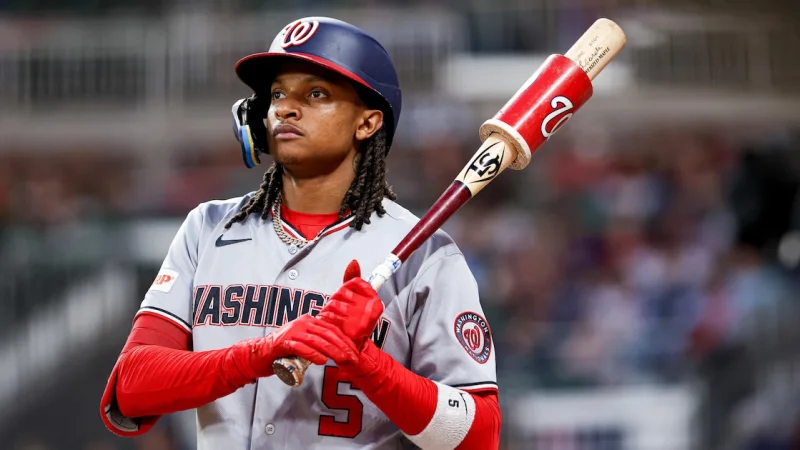
CJ Abrams has turned a strong season into a harder decision for the Washington Nationals. With a little over one week left before the Aug. 3 deadline, the 25-year-old All-Star has become a player other clubs keep checking on, even though Washington is not shopping him.
That is the part that makes the search for Corey Seager matter now: teams in need of help at shortstop are looking for upgrades, and Abrams is suddenly one of the clearest names on the board. He has produced 3.4 fWAR, a career-high 24 home runs, a.288 average and a.905 OPS, numbers that have made him one of the most valuable players on a club that has also seen him emerge as a leader in a young clubhouse.
The interest is not new, but the price has changed. Over the winter, the Brewers balked at Washington’s high asking price on Abrams. This offseason, talks with the San Francisco Giants stalled even after they signaled openness to include Josuar Gonzalez in a deal. The New York Yankees have at least checked in as well, and the Brewers are expected to explore the possibility again soon.

That rising value leaves Washington in a familiar but uncomfortable place. The Nationals are unexpectedly competitive again seven years after their World Series triumph, and they are weighing both directions at once: adding big-league help for a push while also considering whether to sell valuable pieces for prospects. Abrams sits at the center of that split, because the same bat that has lifted his profile has also made him harder to ignore as a trade chip.
There is still a reason rival clubs are hesitating. Evaluators around MLB are split on whether Abrams is better suited at second base or in the outfield rather than at shortstop, and his defensive metrics have been poor. That matters because a hitter with his numbers is easier to imagine as a centerpiece if he can stay where he is; if not, the fit gets complicated fast.
For now, Washington is trying to keep its options open without signaling surrender. It is not shopping Abrams, but it will listen to offers, and with the deadline now close enough to sharpen every call, the question is no longer whether he has value. It is whether the Nationals believe that value is higher in their lineup this week or in whatever another club is willing to put on the table before Aug. 3.
