


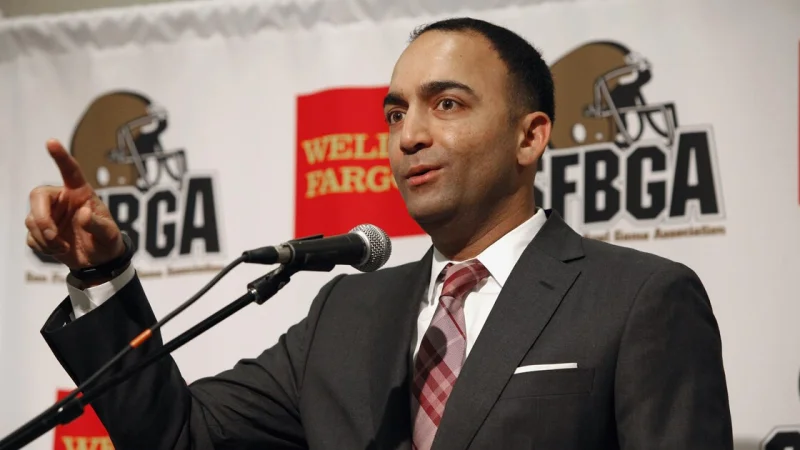
Parag Marathe is leaving the San Francisco 49ers after 25 years, a move that takes one of the team’s most experienced executives out of its football-operations structure just as the organization is already dealing with change near the top. On Saturday, Adam Schefter reported that Marathe is stepping away to focus full-time on Leeds United and Rangers FC, along with other sports efforts.
That makes the departure more than a title change. Marathe had been the 49ers’ top cap expert and contract negotiator, and he served as president of 49ers Enterprises and executive vice president of football operations. He also has been chairman of 49ers Enterprises, giving him a role that stretched across both the club side and the football side of the business.
The timing matters because the 49ers have already gone through a few changes near the top this offseason. Vinod Khosla sold his minority stake after agreeing to purchase the division rival Seattle Seahawks, and the organization also brought Kewsi Adofo-Mensah back this offseason after his run as Minnesota Vikings general manager. San Francisco now has three vice presidents in its personnel and scouting department: Tariq Ahmad, Matt Ploenzke and Adofo-Mensah.
That leaves a real opening. Marathe’s work did not belong to one narrow lane; it sat at the center of the team’s roster building and contract work, and the story now turns to who, if anyone, will absorb those responsibilities inside a structure that is already being reshaped. The answer is not yet public, which makes his exit feel less like a clean handoff and more like a gap the 49ers will have to close quickly.
For Marathe, the next chapter appears to be full-time attention to Leeds United and Rangers FC, plus the broader sports efforts Schefter referenced. For the 49ers, the bigger question is whether the organization fills one of its most important behind-the-scenes roles with a single replacement or spreads the job across the executives already in place. The departure removes a long-serving operator from a season of transition, and that is the part San Francisco will have to manage first.
