


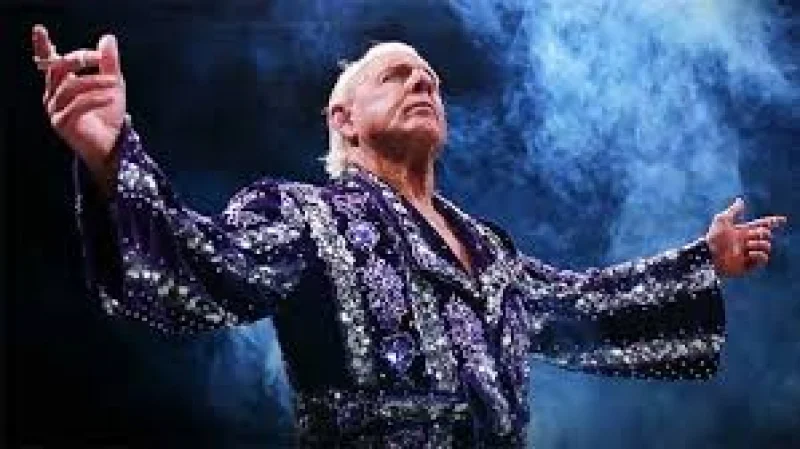
Ric Flair did not reinvent himself when the decades changed. He kept the same entrance music across five different decades, and the rest of his presentation moved with almost no visible adjustment.
That is why his name still draws attention now. Flair’s Nature Boy gimmick sat at the top of wrestling for more than 25 years, and the same core act followed him through WWE, WCW, TNA and New Japan. The consistency was the point: a wide-eyed delivery, a strange cadence, over-the-top intensity and the confidence to call himself The Man.

He did not need to trade one persona for another to stay relevant. He never dyed his hair, kept his fancy suits and aviator sunglasses, and did not swap them for a leather jacket and some Oakleys. He also did not abandon the strut that carried him down the aisle, nor did he give up his trademark trunks for long-boys. In a business built on constant reinvention, Flair made repetition part of the act.
Even there, the details are not perfectly frozen. The colour of his robes may have changed, but that is as far as the transformation seems to have gone. The central image remained intact, which is why the same entrance music could survive so long without sounding out of place. Once a character is built on rhythm, posture and recognition, changing the song would have meant changing the character.
That is the unresolved part of Flair’s story: not whether he changed, because he plainly did not, but why a wrestler with enough range to last across eras chose to leave the heart of the presentation alone. The answer may be simpler than the mythology suggests. Ric Flair did not stay timeless by updating himself. He stayed timeless by refusing to.
