


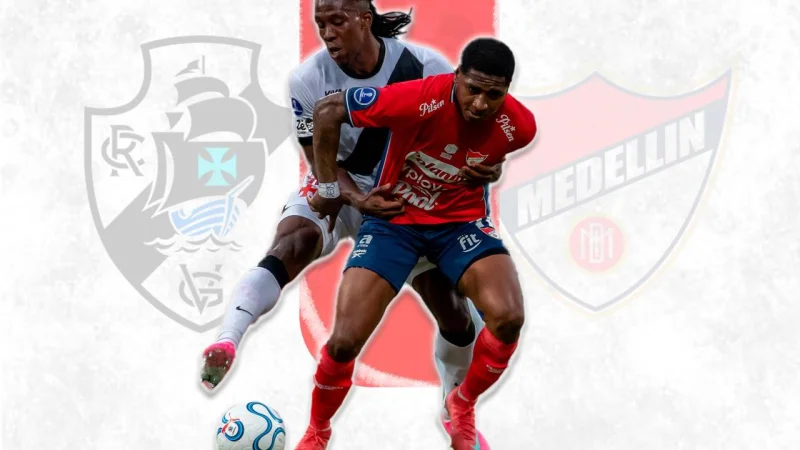
Deportivo Independiente Medellín walked into Rio de Janeiro on Wednesday with one job left: get past Vasco da Gama and into the Copa Sudamericana round of 16. The tie was level at 2-2 after the first leg in Atanasio Girardot, so the second match at 5:00 p.m. Colombia time carried a simple edge — win and advance, draw and go to penalties.
The math is direct. If Medellín wins, it reaches octavos de final. If Vasco wins, it goes through. If the game ends tied again, the night does not stop with extra drama or away-goal calculations; it goes straight to penalty kicks. That is what made this date matter, and why the search around the Copa Sudamericana belonged to one fixture and one result.
Luis Amaranto Perea arrived with a team that had already been asked to do more in less time. He rotated the side and made five changes against Pasto in a 3-2 win over the weekend before the trip to Brazil, trying to lower the workload on a squad that had barely come up for air. Perea said the team has moments in which it plays well, but sometimes confuses intensity with disorder. He added that there had been little time to work, even as he insisted there was enough attitude and desire to do bigger things.
That warning mattered because Medellín was not facing a side defined by its league standing. Vasco da Gama was 17th in the Brasileirao, but that number did not fully describe the weight of the opponent in this kind of tie. The home team had drawn 1-1 with Mirassol on 25 July at São Januário after a 1-0 loss to Vitória, results that framed a shaky run domestically without changing the stakes in Rio. In the Copa Sudamericana, the table was irrelevant. The result on the night was everything.
The first leg showed why Medellín could not treat this as a formality. John Montaño struck in the 45+4' minute and again in the 72nd, while Joaquín Varela’s own goal at 46' gave Vasco a route back into the contest before Claudio Spinelli equalized at 86'. Eight days later, the return match was less about style than survival. Medellín knew exactly where it stood: one goal could send it through, one mistake could send the tie to penalties, and one wasted chance could end the tournament for a team that had just taken shape under Perea.
That is what made Wednesday in Rio different from a routine away match. Medellín needed a result that fit the work it had done over two games, not the noise around it. If it found one, the club would move on in the Copa Sudamericana. If it did not, the night would come down to spot kicks and a single swing of nerve.
