


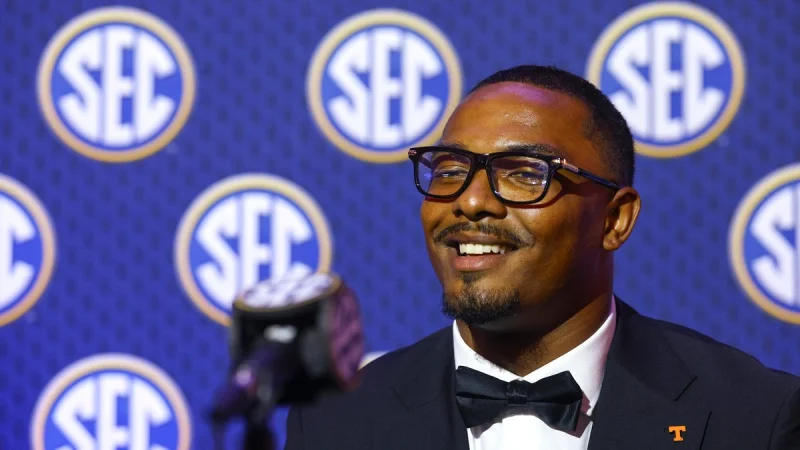
The NCAA has suspended Arion Carter for two games, forcing the Tennessee linebacker to sit out the first two games of the 2026 season after his agent paid for a $427 flight to a pre-draft training facility. Tennessee said the punishment stems from that violation, which the NCAA classified as a Level III case.
For Carter, the timing matters because the ban lands after a season in which he led the SEC with 7.6 tackles per game and earned all-conference honors. He will now miss Furman on Sept. 5 and Georgia Tech on Sept. 12, even though the suspension will not affect his practice time when Tennessee opens preseason camp on Aug. 5.

Josh Heupel said Carter represents what is right about college athletics, praising his four years at the University of Tennessee, his loyalty and his leadership. Heupel also said Tennessee disagrees with the NCAA's decision to punish Carter with a multi-game suspension this fall and that Carter made the right choice for his health and well-being as he works toward a public health degree and an August graduation.
The case sits in the middle of the NIL era's confusion over what counts as a benefit and what counts as routine. Carter was initially declared ineligible while the NCAA reviewed the matter after determining he had accepted a material benefit from a sports agent during the NFL draft's test-the-waters phase. The flight was later repaid, and UT appealed the first ruling, which had called for a three-game suspension before it was cut to two.
That reduction leaves a sharper question than the original punishment did. If Level III violations are supposed to be the lower end of NCAA enforcement and are described as common and routinely reported, Carter's case shows the NCAA is still willing to draw a hard line when a paid trip, an agent relationship and a draft decision overlap. Tennessee will have its star linebacker back after the early stretch, but only after a ruling that is likely to be watched well beyond this one season.
