


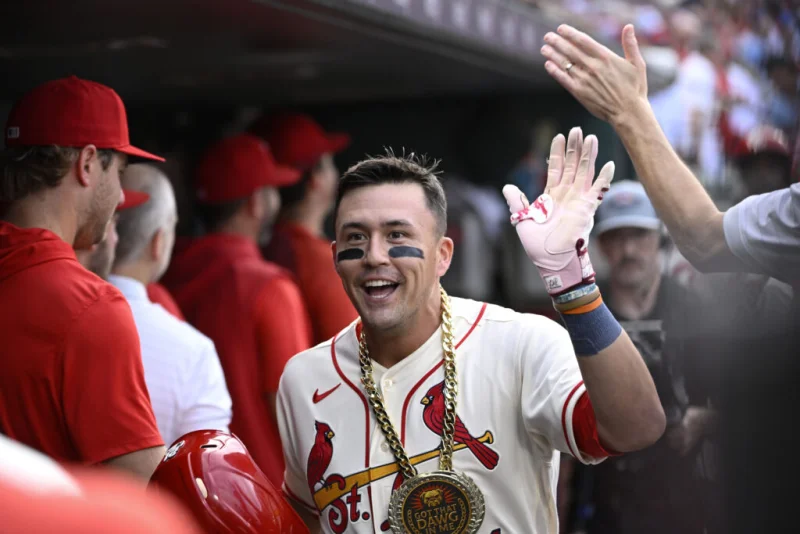
The Cardinals are still in the race and still looking over both shoulders. As of July 21, 2026, they were 51-48 and held the NL’s last playoff spot, but the club entered the trade-deadline stretch with no promise that it would act like a full buyer.
That is why Mason Winn is drawing attention now. The Cardinals sit in a playoff position, FanGraphs gives them just 24.4% playoff odds, and five teams are within three games of catching them. That kind of table makes every roster decision feel bigger, especially when the front office has already signaled it will not abandon its longer view just because the standings are close.
Chaim Bloom has made that part plain. St. Louis is not expected to veer far from the plan that followed last offseason’s payroll cut and youth movement, which means the deadline is less about one all-in push than about whether the Cardinals can protect this season without paying too high a price on the next one. The team still has three impending free agents, and if Ryne Stanek’s $6MM option is declined, that would become four. Those are the easy names to move if the Cardinals decide to sell anything at all.
JoJo Romero fits the same frame, only with more present-day value. He has a 3.35 ERA, 21 holds and a $4.26MM salary, and he remains a sensible target for a club looking for relief help. But his season was interrupted by an injured list stint after treatment for appendicitis, and that wrinkle matters because it complicates both the asking price and the risk of waiting. Ramón Urías is even simpler: he is not likely to bring much back after missing most of the season with tennis elbow.
The harder choice is whether the Cardinals treat those players as movable pieces while they are still in a playoff spot. That is the friction in this deadline: a club can be close enough to justify adding, yet still decide that veteran value is better spent elsewhere. Dustin May shows why the market may split the difference. He is on a $12MM salary, will collect a $500K buyout on a mutual option at the end of the year, and has not completed six innings in an appearance since his one-hit shutout against San Diego on June 15. His 4.78 earned run average across 98 innings does not point to a premium rental, but it does make him the kind of arm a contender could still discuss if the price is modest.
Lars Nootbaar is the name that bridges those two ideas. He is the biggest piece among the Cardinals’ controllable trade candidates, and St. Louis probably would have traded him last offseason had he not required surgery to address Haglund’s deformities. That history tells the story: the Cardinals are open to using control as currency, but only if the return matches the value of giving up a player who still fits a future core.
The next stretch should clarify how far they are willing to go. With a manageable slate before the deadline and the clock moving toward August 3, the Cardinals have room to stay in the Wild Card race and still shop from the edges. The question is not whether they will choose one side cleanly. It is which pieces, if any, they are willing to trade while trying to keep the door open for October.
