


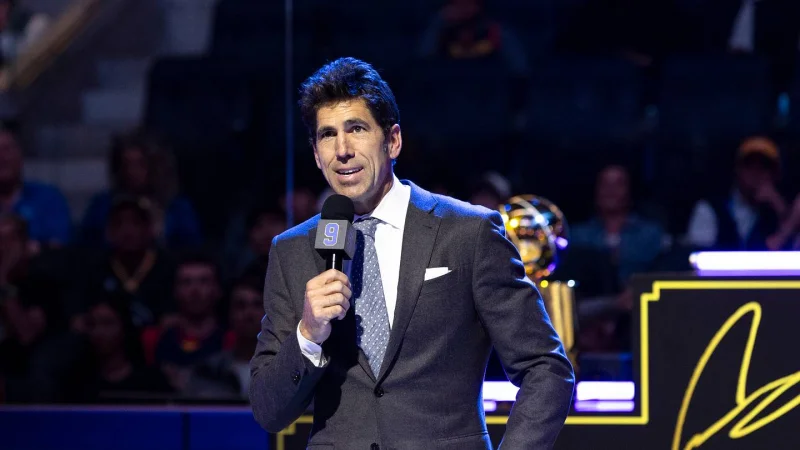
Bob Myers went back to the Warriors' most debated roster idea and defended it without blinking: the club's "two timelines" plan was a real attempt to win now and later at the same time. In an October of last year appearance on Tom Tolbert's podcast, Myers said high draft picks are the moment to take a swing, even if the choices bring more risk than certainty.
That matters because the question around Bob Myers is not whether the plan existed, but whether it worked. The Warriors paired three veterans — Stephen Curry, Draymond Green and Klay Thompson — with three younger players who were supposed to grow into the next phase: Jonathan Kuminga, James Wiseman and Moses Moody. Myers said there was a contingent of fans, media and even people in the organization who wanted someone more ready to play, but he argued that drafting high was exactly when the team should chase a higher ceiling.
He made that case by reaching for rarefied company, invoking Tracy McGrady and Kobe Bryant as examples of the kind of talent the Warriors hoped to target rather than settle for a safer, lower-upside player. That was the logic of the strategy itself: keep the veteran core intact while stockpiling younger talent that could eventually take over when the first group aged out. It sounded neat on paper because it promised two paths at once, but it also depended on the younger side becoming good enough fast enough to matter.
The results, by the article's own account, never matched the plan. James Wiseman completely flamed out. Jonathan Kuminga never fit into what the Warriors were trying to do. Moses Moody became a decent role player, but not an All-Star. Steve Kerr was left in a difficult position, and his fraught relationship with Kuminga became one of the clearest signs that the handoff the Warriors wanted never arrived cleanly.
Myers said he would not have done anything differently if he had known how those picks would turn out, which is the sharpest defense of the whole approach and the hardest one to square with the failure that followed. The unanswered question now is not whether the Warriors took chances. It is whether the people who made them still believe the only mistake was the result, not the strategy.
