


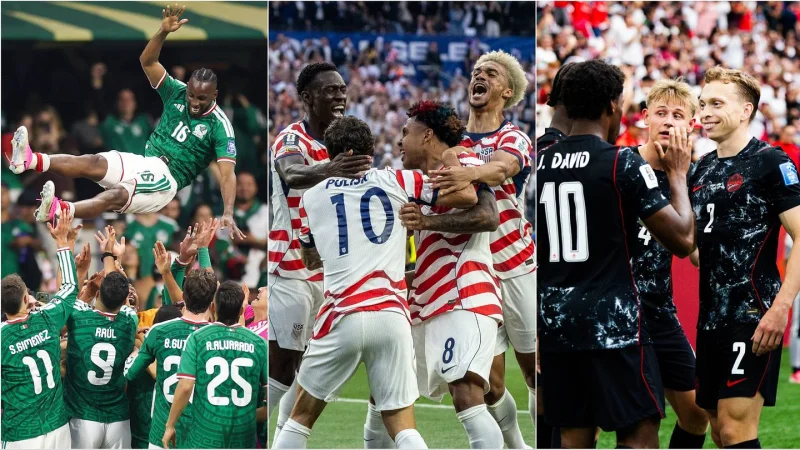
The 2026 World Cup changed the hosting map. For the first time, three countries shared the tournament, and the United States, Mexico and Canada split 15 matches between them.
That is why the question of which country has the most World Cups is being searched now: this edition was the first to be staged across three hosts, and it gave each country five games on home soil. It also left none of them in the last eight, which is the blunt measure of how far the experiment went.
The balance was exact. The USMNT played five games. Mexico played five. Canada played five. Together, the three co-hosts created a World Cup that was spread evenly across three nations rather than concentrated in one, and that is what made the 2026 edition different from every tournament before it.
Canada provided the sharpest contrast between pride and frustration. It finished second in its group and made history at home, but it had to play both knockout games in the United States. That detail turned a successful run into a mixed one, because the record books will show progress while the route to the next round will show how limited the reward was on home soil.
Ben Steiner captured that split neatly, saying Canada’s run felt disappointing even if the team probably met and exceeded expectations. That is the pressure point inside the story of this World Cup: the format opened the door for three hosts to share the stage, but once the group stage ended, none of them moved beyond the round of 16.
Mauricio Pochettino said ultimate glory was within the USMNT’s reach, and JT Batson framed the team in terms of belief, pride and the pull of a jersey with an American flag. Those ambitions gave the tournament its emotional charge, but the outcomes settled into a simpler truth. The three hosts delivered a first-of-its-kind World Cup and a combined 15 matches, yet the event ended without a co-host in the quarterfinals.
That is the story left behind by the 2026 tournament: a shared-host format that produced a clean split of five games each, historic moments on home soil, and a final accounting that was impressive in reach but short of a deeper run for any of the three countries.
