


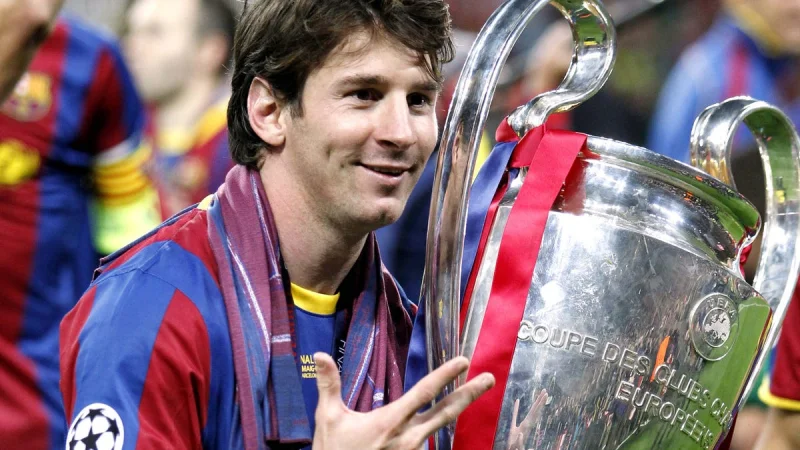
The World Cup final is being framed as a meeting point for Spanish soccer’s deepest export: the players, ideas and habits built at Barça and La Masia. Lionel Messi is at the center of that argument, not because he wore Spain’s shirt, but because his game was formed in Catalonia before he became Argentina’s defining figure.
That is why Lamine Yamal keeps coming up in the same breath. At 19, he already helped Spain to the 2024 Euro title, and he stands as the latest reminder that Barça still produces players who can shape the biggest matches on either side of a final. Eight members of Luis de la Fuente’s squad at this tournament came through Barcelona, and Spain’s current run has been powered by a system that keeps putting technically polished players into the line of fire.
Messi’s own path started far from that stage. Born in Rosario, he began at Abanderado Grandoli and later moved to Newell's Old Boys before arriving in Catalonia at 13 and joining FC Barcelona’s setup. He made his pro debut at 17, left Barcelona at 34 and eventually acquired Spanish citizenship, which is why the debate around his footballing identity never really disappears. He was shaped by the same environment that raised so many Spain players, and he is still the most famous example of Barça’s reach going far beyond one national team.
But the Spain connection was never the same as the Argentina pull. Ginés Meléndez said this week in AS that Spain tried to get Messi to play for them, adding, “We tried to get him to play with us... but he never wanted to,” while the Argentine federation arranged a U-20 friendly match so he would know he was wanted. That detail matters because it cuts against the neat story of a player who simply belonged to Spanish soccer; Messi was there, and Spain wanted him, but he chose Argentina and never gave Spain a serious opening.
Spain’s current squad still shows how wide the Barça influence runs. Pau Cubarsí, also 19, helped Barcelona to multiple league titles and then helped Spain keep a clean sheet against France in the semifinal win over France, the sixth shutout of the tournament for La Roja. Gavi started at Real Betis before moving to La Masia, while Dani Olmo, Marc Cucurella and Eric García also came through Barcelona’s development chain. On the other side, Argentina has six players currently playing in Spain, and Rodrigo De Paul and Nicolás Tagliafico got their first taste of soccer outside Argentina with moves there, a reminder that the final is not a clash between Spanish soccer and everyone else so much as a showcase of how far Spain’s game has spread.
That leaves the final with a simple but uncomfortable truth for Spain and Barça alike: the academy model is no longer just about producing one nation’s team. It produces the frame of the match itself. Messi proved that long before the current generation did. Yamal is proving it now.
