


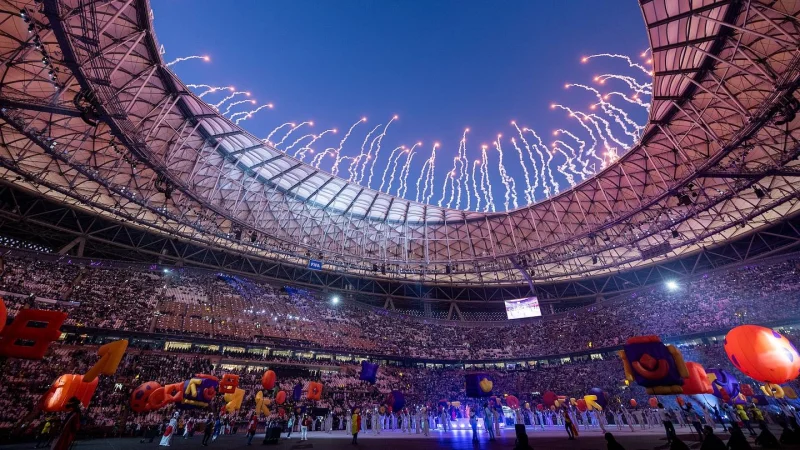
Jessica Meir and Chris Williams watched the World Cup from the International Space Station last Saturday, joining a team dinner 250 miles above Earth as England beat Norway in the World Cup quarter-finals. For Meir, it was another reminder that even in orbit, football can still feel close to home.
The question of how many people are watching the World Cup has no easy answer, but the reach is plainly wider than a single stadium, a single country or even a single continent. Meir, who has spent over 350 days in orbit, said events like the World Cup make her feel closer to home. Williams, 42, who has a doctorate in physics from MIT, said watching the tournament from the station made him feel closer to home too.

That reaction matters because the World Cup has long been sold as a global shared moment, the kind that can pull in viewers from ordinary living rooms and extraordinary places alike. Meir said she remembered how alive the streets were in Vancouver, British Columbia, when it hosted the winter Olympics in 2010, and how that same energy filled Moscow during the 2018 World Cup while she was training in Russia for her first spaceflight. She completed the first all-female space walk in 2020 with Christina Koch, and she brought that same sense of scale to a tournament now watched well beyond Earth.
Still, the unity around the game does not always land cleanly. The World Cup has also been divisive, and the easy story about football bringing everyone together can feel thin at times even as people in orbit describe it in almost sacred terms. Sophie Adenot said the tournament reminded her that, even from space, they are still part of humanity, that for a few hours everyone is watching the same event and sharing the same emotions, and that borders seem to disappear.
Tristan Da Cunha is often credited as the most remote inhabited place in the world, but the sight of astronauts following the World Cup from the ISS pushes that idea further. The tournament can reach people who are separated by oceans, by isolation and, in this case, by the atmosphere itself. What remains unanswered is not whether the World Cup can travel far. It is how far that shared pull can go, and who is still being drawn in when the next match begins.
