


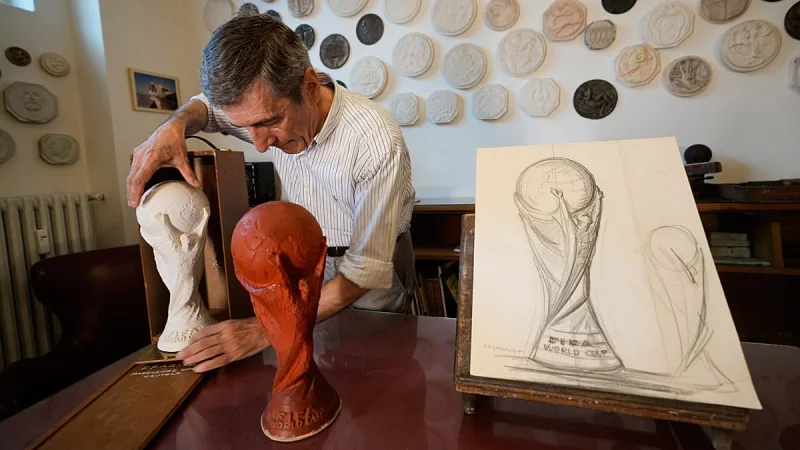
The World Cup trophy is made of real gold, but not the kind that turns up in a vault or a jeweller’s display. The current FIFA World Cup Trophy, in use since 1974, is 18-carat solid gold, stands 36cm tall and weighs 6.142kg.
That is why the question keeps coming back every time the final arrives. The trophy being lifted now is the one first handed to West Germany in 1974, and it was designed by Silvio Gazzaniga after FIFA opened a competition once Brazil had become the first country to win the tournament three times.
Gazzaniga knew the business of making prizes. He already had experience at GDE Bertoni and had helped make the Olympic medals for the 1960 Games in Rome. His design beat more than 50 submissions from seven different countries, and his own description of the trophy makes clear what he was trying to do: “As this is the World Cup, it’s only logical that the world should form part of the trophy. Of course the world is spherical and, as such, very similar to a ball. The human figures that emerge from the base material extend upwards and support the world, which I also imagined as a ball.”

The figures explain the shape. The material explains the price. The current trophy cost about £7,690, or $9,390, to make at the time, and would cost about £90,000, or $110,000, today. It is not a pure gold object; 18-carat means gold mixed with other metals, which gives it enough strength to survive being handled, photographed and carried around a stadium after the final whistle.
That detail matters because there have been two World Cup trophies. The one most people picture is not the original. Before Gazzaniga’s design, there was the Jules Rimet Trophy, designed by Abel Lafleur and named after former FIFA president Jules Rimet after his death in 1956. It was around 30cm high and had a far more troubled life, from being hidden by Ottorino Barassi in a shoebox under his bed during the Second World War to being stolen from Westminster Central Hall in London in 1966, then found by Pickles under a hedge a week later.
Brazil were allowed to keep that original trophy after winning the World Cup for the third time in 1970, but its story did not end there. It was stolen from a display box at the Brazilian FA’s offices in Rio de Janeiro in 1983 and was never recovered. Brazilian police later claimed it had been smelted. That disappearance is the reason the present trophy exists at all, and why the answer to the gold question has to start with a warning: the famous prize on television is real gold, but it is not the original one football began with.
So when either Lionel Messi or Rodri is handed the trophy at MetLife Stadium in New Jersey, what they receive is a 36cm, 6.142kg object of 18-carat solid gold, made to replace a prize that survived war, theft and recovery before vanishing for good.
