


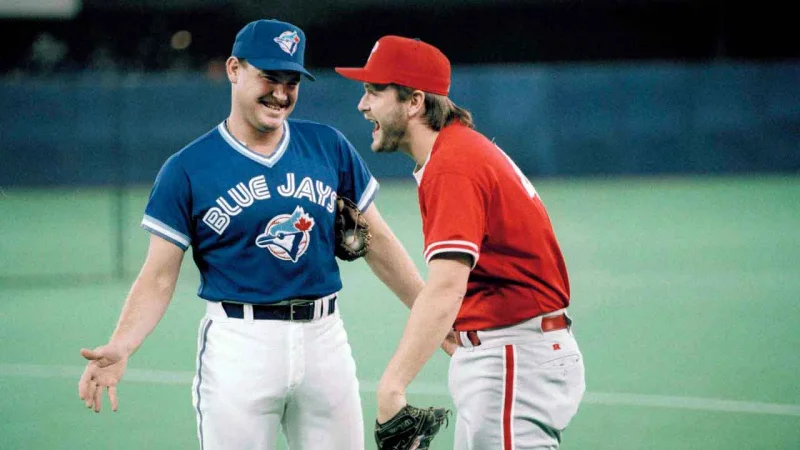
Duane Ward died this weekend at 62, and the Toronto Blue Jays said he died of natural causes after he had arrived in Toronto on Friday, July 17 for a celebration of the club's 1992-93 championship teams.
That made the weekend, built around memories of Toronto's back-to-back title run, suddenly about loss as much as celebration. Ward was one of the quiet pillars of those teams, and his death landed while fans were gathering for a franchise moment that was meant to look back on the greatest era in Blue Jays history.
Ward's name carries particular weight because he was the winning pitcher in Game 6 of the 1993 World Series, when he worked a perfect top of the ninth against the Philadelphia Phillies and left Toronto one out from its second straight championship. He had already been central to the 1992 title run, working alongside Tom Henke as a dominant late-inning pair for the Blue Jays.
In the 1992 World Series, Ward was nearly untouchable against the Atlanta Braves in four appearances, striking out six of the 12 batters he faced while allowing one hit and one walk. A year later, after Henke had left for the Texas Rangers as a free agent, Ward took over the ninth inning, saved an American League-best 45 games, earned his only Star Game nod and finished fifth in Cy Young Award voting.
The contrast is what gives the news its force. The same weekend that included the unveiling of a Joe Carter statue, built to honor his Series-ending home run and set to stand outside Rogers Centre's gates, became a reminder that the championship years are no longer abstract history. One of the men who made them possible was there to be celebrated, then gone before the weekend was over.
Ward's career never quite had the long, clean arc his best seasons suggested. He pitched in a majors-high 81 games in 1991, in 79 more in 1992, then later suffered a torn rotator cuff that cost him the entire strike-interrupted 1994 season. He returned in 1995 but pitched in just four games, and by the time he was inducted into the Canadian Baseball Hall of Fame in 2020, his legacy had already settled into one simple truth: he was the finisher Toronto trusted when the stakes were highest.
What remains unanswered is the specific cause behind the natural causes announcement. What is not in doubt is the scale of the loss for the Blue Jays and for the people who still measure those championship seasons by the men who held the lead when the last outs mattered.
