


Jude Bellingham got through England’s quarterfinal against Norway on July 11 without the yellow card that would have ruled him out of the semifinal. That mattered because he came into the match already carrying one booking from the previous match against Mexico, and one more would have triggered a suspension under the tournament rules.
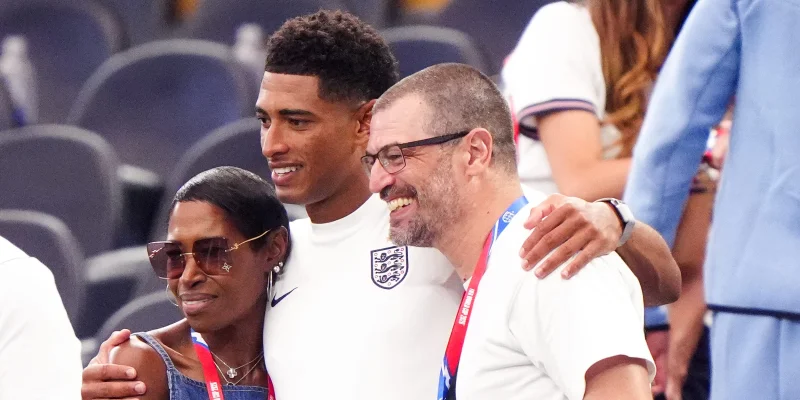
The search around Jude Bellingham Parents lands on Denise, the person he said spent all week telling him to watch his language, tackles, face and emotions. Her message was simple: stay inside the line and do not give the referee a reason to act. Bellingham said he knew what was at stake, and by the end of the night he had done enough to stay available for the next round.
Bellingham’s account was not just about caution. He said the referee was class and allowed him to communicate in a respectful way, which made it easier to keep his balance in a match with so much riding on every decision. If the official had been quicker to clamp down, the same kind of chatter that helps him manage a game could just as easily have cost him the next one. Instead, he said, it was a well-competed match of football and he got through it.

The family angle goes deeper than one warning before one match. Bellingham has said his father was his first hero and coach, and that watching his non-league games made him fall in love with football. Mark Bellingham, born in 1976 in Essex, played as a youth with Catholic United in the mid-1980s before going on to play as a striker in non-league football, scoring more than 700 goals over the course of his career. He also served as a sergeant in the West Midlands Police until 2022, a second career that sits alongside the football story many already know.
That background helps explain why the family pushed for a normal routine for their child. Mark Bellingham and Denise Bellingham wanted him to live at home in Birmingham and train close to home, even when bigger clubs were interested when he was 12 or 13. The point was not just development. It was control, stability and enough everyday life to keep the game from swallowing everything else.
What changed on July 11 was not just that Bellingham finished a quarterfinal without a booking. He also stayed in the tournament at the moment when one mistimed challenge, one sharp word or one flash of temper could have sent him to the sideline for the semifinal. Denise’s warning did not win the match for him, but it appears to have helped him play the kind of controlled game that tournament football demands.
