


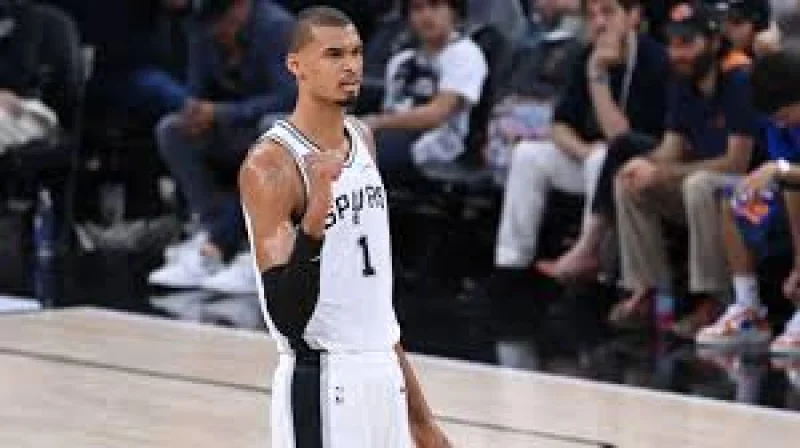
Victor Wembanyama signed his next Spurs contract on Friday at his home in France, locking in a five-year extension projected at $252 million and taking less than the most he could have earned. The deal gives him 25 percent of the salary cap, not the 30 percent he could have reached under the supermax clause.
The timing matters because Wembanyama's decision landed the same day incoming NBPA executive director David Kelly argued that the system should not force a player to carry so much of the burden just to keep a team together. Wembanyama was eligible for the bigger path if he won MVP, Defensive Player of the Year or made an All-NBA team next season, and the gap between the two structures is steep: the supermax version was projected at $301 million over five years.
Wembanyama had already become the NBA's first unanimous Defensive Player of the Year, and that status made the choice even more striking. He gave up the chance to earn a $50 million bonus over five years to help the Spurs remain together, a move that mirrors the pressure other stars have felt as teams live with the second-apron threshold, set at just under $222 million next season.
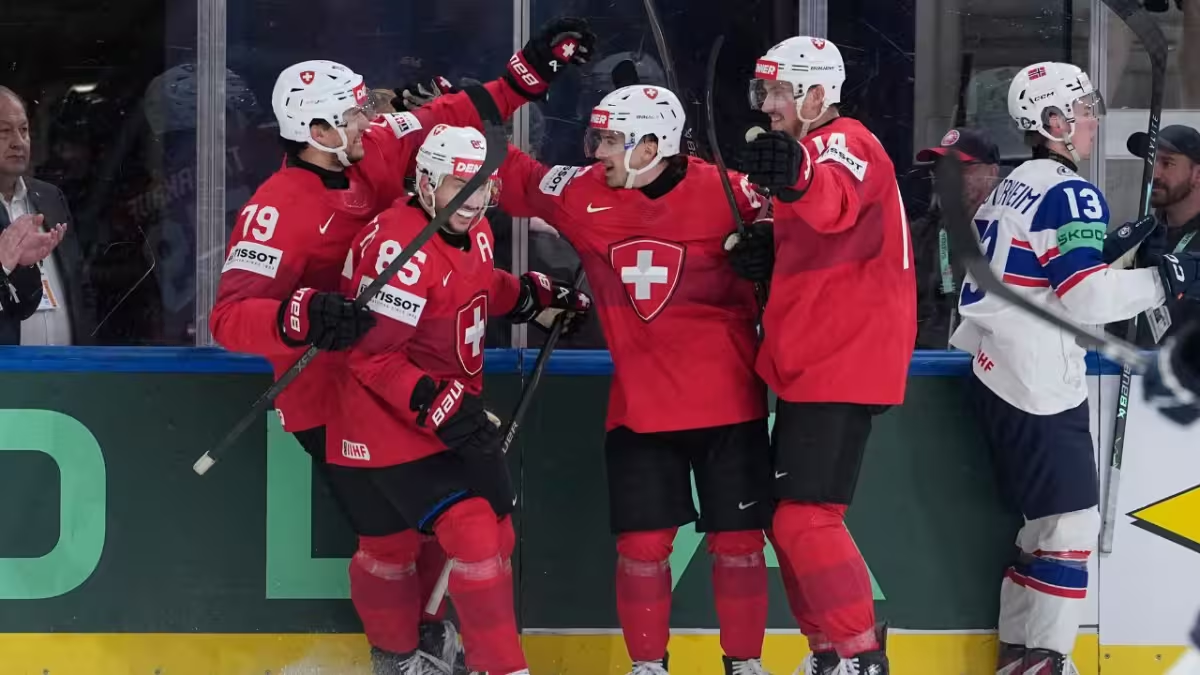
That is why the debate around the cap rules has turned so sharp. In 2024, Jalen Brunson signed an extension with the Knicks a year earlier than he could have and left around $37 million on the table in the first three years of his deal, a sacrifice that helped the Knicks later acquire and retain OG Anunoby and Mikal Bridges. The pattern has become familiar: elite players give up money, and teams use the breathing room to keep a roster intact.
Not everyone sees that as a healthy bargain. Brad Stevens said the penalties for going over the second apron were too punitive and pointed to the Celtics as an example, saying they had “70 percent of our cap and such a high percent of our usage tied into two players.” The Celtics won the NBA title in 2024 with Jaylen Brown and Jayson Tatum leading them, then faced the same financial pressure that now shapes decisions across the league.
Kelly's complaint goes to the heart of the issue. He said the system should not put a player in a position where he has to carry that burden in order to keep a team together, and he added that a system that does that is a problem. What the NBPA wants next is the part still not fully spelled out in public, but the direction is clear: the union is pushing for second-apron rules that do not make salary sacrifice the price of continuity.
For Wembanyama, the choice is already made. For the league, the larger question is whether the second apron keeps acting like a hard cap by another name, or whether the next round of bargaining changes the math before more stars decide they have to leave money behind to keep their teams alive.
