


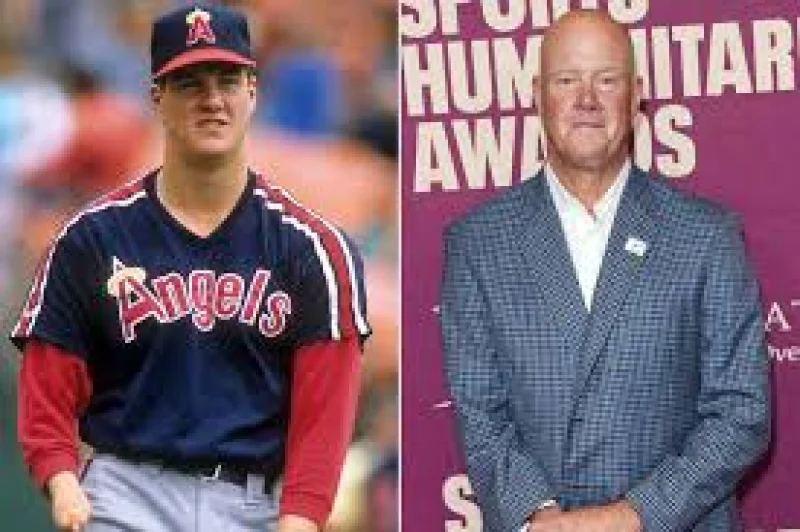
Jim Abbott is set to receive the Jimmy V Award for Perseverance at the 2026 ESPY Awards on July 15, another public honor for a pitcher whose career has long been held up as proof that limits are not fixed. The award will place Abbott back in the center of a national stage nearly three decades after he left the major leagues.
That renewed attention is not coming from memory alone. In June, the documentary Southpaw: The Life and Legacy of Jim Abbott won a Peabody Award, giving fresh recognition to a life story that has already traveled well beyond baseball. Abbott, who was born without a right hand, has said his approach on the mound was to show what is possible when a person refuses to give up, and that is the message the award is meant to honor.

The recognition rests on a career that was unusual from the start. Abbott was born on Sept. 19, 1967, in Flint, Michigan, and later went 26-8 at the University of Michigan before being selected in the first round of the 1988 MLB draft by the Los Angeles Angels. He had already received the 1987 Golden Spikes Award and the 1988 Sullivan Award, and he was named the 1988 Big Ten Male Athlete of the Year. He also won a gold medal with Team USA at the 1988 Seoul Olympics, then entered the major leagues and finished his debut season with a 12-12 record.
His most famous day came on Sept. 4, 1993, when he threw a no-hitter at Yankee Stadium. By then he had already been traded to the New York Yankees ahead of the 1993 season, and his career would later include two seasons back with the Angels starting in 1995, plus time with the Chicago White Sox and Milwaukee Brewers. The line that stays attached to him, though, is not a headline moment. Abbott retired after the 1999 season with 87 wins and 108 losses, a record that sits uneasily beside the inspirational image that has followed him for years.
That is the point of the Jimmy V Award. It is not a lifetime achievement prize for numbers, and Abbott’s career was never built on dominance. It was built on persistence, adaptation and the stubborn ability to keep pitching after every stage of his life asked the same question in a different way. The July 15 ceremony will not change the record, but it does formalize the answer: Abbott’s legacy is still being measured less by what he lacked than by what he kept doing anyway.
