


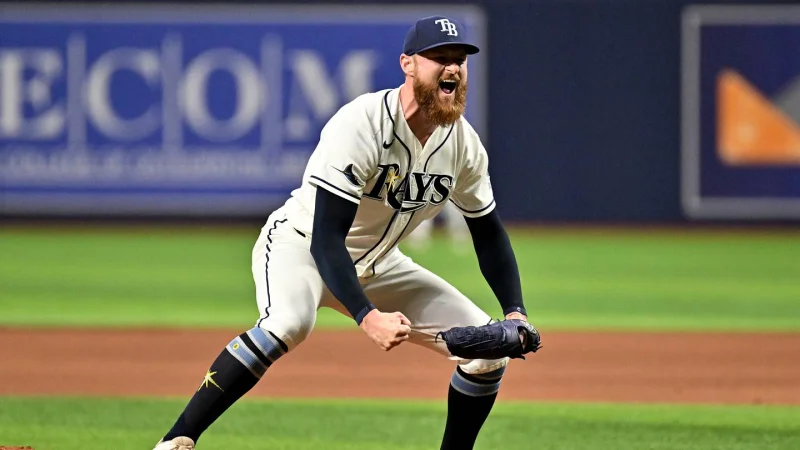
Bryan Baker is an All-Star now, and that alone has given a fresh edge to a trade that looked ordinary when the Baltimore Orioles made it last season. About a year after leaving Baltimore, Baker is the Rays' trusted closer, the kind of late-inning arm the Orioles have not had nearly enough of.
That is why his name is suddenly back in circulation. The Orioles' bullpen is one of the worst in the league, so the sight of Baker thriving in Tampa Bay lands like a reminder of what Baltimore gave away and what it still lacks. He did not arrive in the Major Leagues as a finished pitcher, either. Baker had thrown just one career inning when the Orioles claimed him off waivers after the Toronto Blue Jays designated him for assignment, then kept him for four seasons as a regular piece of their bullpen.
Those Baltimore years were uneven. Baker was sometimes one of the Orioles' best arms in the pen, and at other times he was sent to the minors. That is part of why the trade has to be judged carefully. The Orioles dealt him to the Rays for a comp pick in the 2025 draft, and on the surface that looks small beside an All-Star closer. But the better version of Baker was built in Tampa Bay, where pitching development helped shape the pitcher he is now.
That distinction matters. If the Orioles had kept Baker, he would very likely have remained the mid-to-high three ERA pitcher he was for most of his time in Baltimore. In other words, the move itself was not the mistake. The real failure was what came after, when the Orioles were left trying to patch a bullpen that has become one of the weakest in the game while Baker grew into a trusted late-inning weapon for the Rays.
So the trade now reads less like a Baltimore blunder than a lesson in timing, player development and what a club can reasonably expect to own. Baker's leap did not happen in a vacuum, and Baltimore should not assume the version it would have kept would have been the one being celebrated now. The question that lingers is not whether the Orioles gave up an All-Star. It is why they still do not have the kind of relief pitching that made Baker matter in the first place.
