


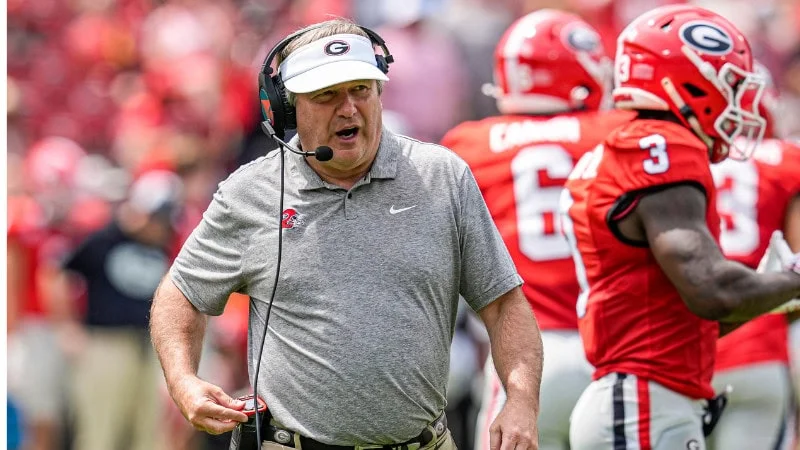
Georgia enters 2026 with the most favorable schedule in the SEC, a setup that gives Kirby Smart’s team a real chance to spend the regular season moving forward without many of the breaks that usually complicate a run through conference play. Georgia does not have a single ranked opponent back-to-back, does not face a road game without a home game in between, and gets Oklahoma at home.
That is why the schedule is drawing so much attention now. Four of Georgia’s first five games are in Athens, Georgia closes the year with Missouri, South Carolina and Georgia Tech, and its neutral-site game against Florida is in Atlanta. Taken together, it is easy to see why Georgia is being described as the SEC team with the weakest schedule and why the path to the College Football Playoff looks open before the season even starts.

The size of the advantage is not just about what Georgia avoids. It is also about what is left standing as the season’s defining test. Oklahoma is projected to be Georgia’s highest-ranked regular-season opponent, and the matchup comes with enough questions of its own to matter. John Mateer begins year two as Oklahoma’s starter, the Sooners lost some talent to the NFL, and they did not lose anyone of much significance to the portal. They should also have one of the most improved offensive lines in the conference. That makes the game more than a checkbox on a favorable slate, even if Georgia is expected to be favored in every game it plays.
Still, the cleanest schedule in the league does not erase the one opponent that keeps showing up as a problem. Georgia has been favored in each of the last six meetings with Alabama, and Alabama has still won four of those outright, including three of the last four. Georgia has beaten Alabama only in rematch games in the last 18 years after losing to the Tide earlier in the same season, a pattern that says more about the matchup than the odds. Kalen DeBoer is 2-1 against Smart and won in Sanford Stadium last season, while Georgia has lost one game in Sanford Stadium in the last six years. The margin for error is huge. The margin for surprise is not gone.
If Georgia handles the games it should handle, the schedule points toward a regular season that could carry it straight back into the College Football Playoff discussion without the usual chaos of SEC play. The question is not whether the path is there. It is whether Georgia can turn the path into a season that never needs rescuing.
