


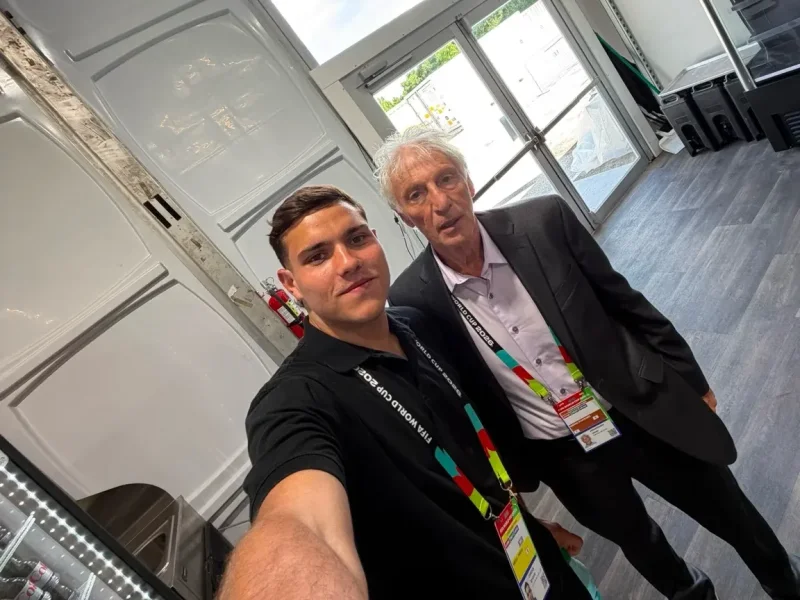
José Pékerman says he never had any doubt that Lionel Messi would spend the next 10 years fighting to become one of the world’s best players, and he now points to the 2006 World Cup debut as the moment that path began. Messi was 18 years old when Pékerman sent him on against Serbia and Montenegro in the 75th minute with Argentina already 4-0 up in Gelsenkirchen, and the teenager quickly added an assist and a goal contribution in a 6-0 win.
The reason Pékerman is being revisited now is simple: that first World Cup cameo has grown into a landmark in Messi’s career, and into a lasting argument in Argentina over whether he should have played more in Germany 2006. Messi has since appeared in six World Cups, with 30 matches and 20 goals, and he lifted the 2022 World Cup title. That makes the old decision feel less like a footnote than the opening scene of a career that kept expanding long after that summer.
Pékerman’s own explanation was that Messi needed minutes to get used to a more professional and more complicated level of football while his talent kept growing. He has also said he could see from the start that Messi was going to be something special, calling him a talent so obvious that there was nothing to discover. In that view, the substitution against Serbia and Montenegro was not a gamble but a managed step in a long progression, with the coach trying to balance promise and responsibility.
But the debate never disappeared because many in Argentina still believe Pékerman should have given Messi more time in Germany 2006. Messi started only once there, in the 0-0 draw with Holanda, came on as a substitute against Serbia and Montenegro and against México in the round of 16, and then stayed on the bench when Alemania knocked Argentina out on penalties after a 1-1 draw. Critics were especially uneasy with the choice to bring on Esteban Cambiasso and Julio Cruz instead of Messi or Pablo Aimar, a decision that still hangs over Pékerman’s name.
Pékerman calls that chapter a beautiful story and says he enjoys it, but the unresolved part is the one he did not finish in public: what he was trying to tell Messi beyond the first lesson that talent alone was not enough. The first minutes came and went in 2006, and Messi kept rising anyway. The question that remains is not whether Pékerman saw the future, but how much more of it he thought he was explaining to the boy he put on the field in Gelsenkirchen.
