


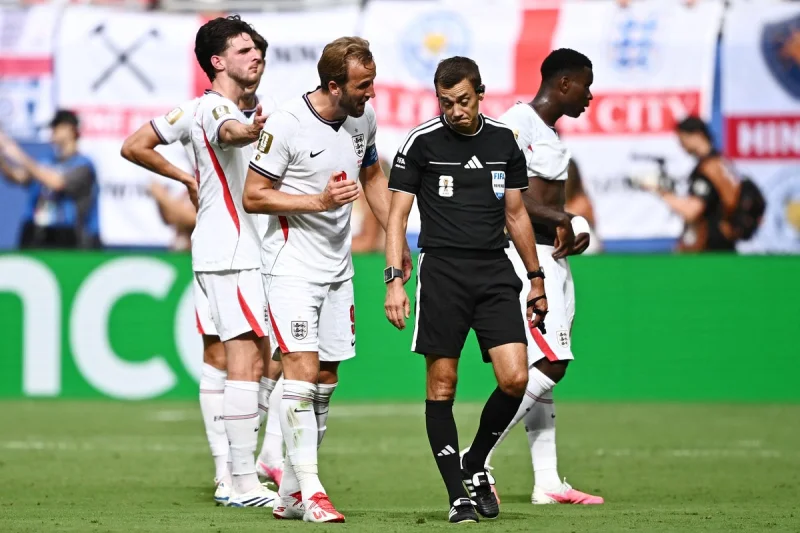
Norway’s opener against England stood after Harry Kane appealed for a foul in the build-up and referee Clement Turpin saw no reason to overturn it. Andreas Schjelderup then made the moment count in the 36th minute, and England were left chasing the game after a first-half call that carried real weight.
This was the kind of decision supporters kept looking back to because it came in a World Cup quarter-final, when every stoppage can tilt the match. Kane was left holding his ankle after Patrick Berg came through the back of him, but the goal was allowed to stand and the game restarted without an obvious VAR review in view.
What made the call harder to ignore was how narrow the margin looked from England’s side. Schjelderup fired in off the post from out wide, and the challenge on Kane came just before the finish, leaving the England captain convinced he had been fouled. But ITV refereeing expert Christina Unkel said the Norway player was able to tip the ball and that there was no contact to Kane’s ankle, while Gary Neville summed up the on-air view more bluntly: “It’s not a free-kick, absolutely not.”
That explanation also fit the bigger comparison hanging over the decision. Argentina had benefited from a VAR call in the last-16 clash against Egypt, where the review involved a foul significantly far back in the build-up to Egypt’s second goal, but this one was treated differently because the contact was judged not to cross the line into a foul and not to break the flow in the same way. England had also dominated possession for much of the first half before falling behind, which made the moment feel even sharper for Kane and the players around him.
England did not let the setback define the half. Jude Bellingham equalised late in the first half, and Kane later thought he had scored again before the linesman raised his flag for offside, a call that was confirmed as correct. The disputed opener stayed on the books, and that left England needing to answer not just Norway’s goal but the judgment that had allowed it to stand in the first place.
