


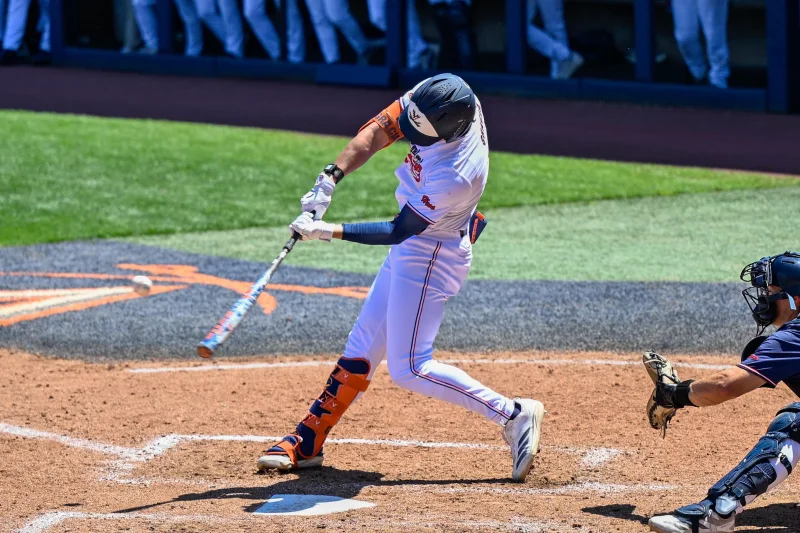
Aj Gracia has gone from a college star with elite numbers to one of the most debated names in the 2026 MLB Draft. Some projections put him in the top 10. Others push him all the way down toward the end of the first round, or even beyond the top 25, which is why his name is moving so quickly right now.
The timing matters because draft boards are tightening, and Gracia is no longer just a broad first-round discussion. He is being treated as a player who could come off early enough to change how the top of the draft unfolds. That is not hard to understand after he hit.354/.489/.632 in 2026 while earning All-ACC honors for the third straight collegiate season.
His case starts with production that has followed him at every stop. Gracia earned All-ACC honors in each of his three collegiate seasons, set the Blue Devil freshman record for home runs and RBI in 2024, led Duke in walks that year and again in 2025, and finished the 2025 season on a 30-game on-base streak. Perfect Game had already stamped him as the top outfielder and the No. 5 player overall in New Jersey in the 2023 high school class, which gave him a prospect profile long before the draft talk became loud.

At Virginia, he backed up that reputation with a season that forced evaluators to take him seriously as a complete hitter. He reached base in 51 of his 56 games and was clobbering an extra base hit once every seven at-bats, production that fits the kind of bat teams usually want early in the first round. He also started 55 of his 56 games in center field, a workload that shows how much Virginia depended on him when he was on the field.
That is where the draft debate gets complicated. Gracia is described as a top-10 talent, but mock drafts have scattered him far wider than that because his 2026 season was not clean. He missed four games and played through multiple undisclosed injuries that hampered his game speed, a detail that matters when clubs are trying to decide whether a center fielder’s athletic edge will hold up against professional arms and better defenders. For teams, the question is not whether the bat belongs in the first round. It is how much the injury-affected speed drops him when the board starts thinning out.
He followed Chris Pollard to Virginia ahead of the 2026 season, and that move gave him the platform for the strongest statistical line of his college career. Now the draft is the next test, and the gap between a top-10 selection and a pick outside the top 25 tells the story of a player whose upside is obvious but whose exact landing spot still depends on how much weight clubs put on the injuries, the speed concern and the steadiness of his three-year record. The answer will come when the 2026 MLB Draft starts to sort the players who look similar on paper and very different on the field.
