


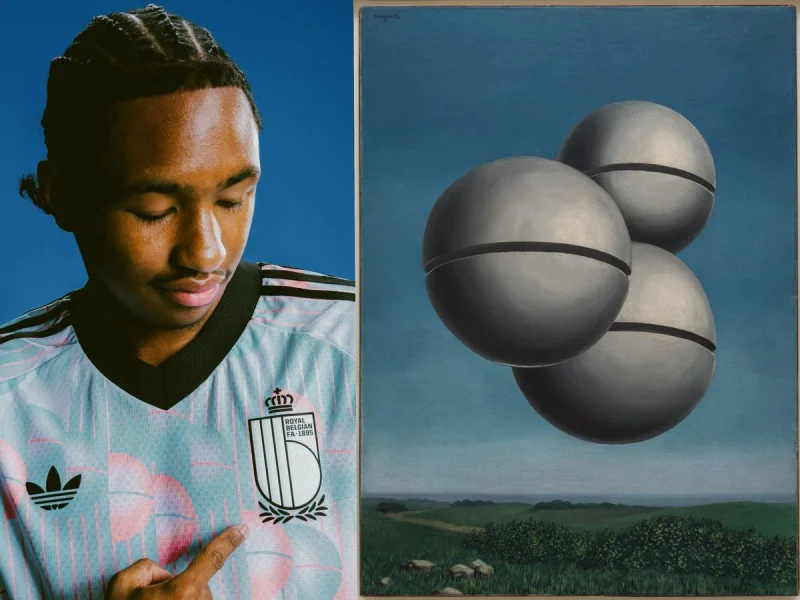
Belgium wore pink and blue in Seattle, and the away jersey did more than cover players. Adidas built the kit around René Magritte, turning a World Cup knockout match against the United States into a moving gallery of Belgian Surrealist art.
The shirt was speckled with a layered circular motif lifted from Magritte’s early paintings, with the palette drawn from Grelots roses, ciels en lambeaux from 1930 and a second nod to Voice of space from 1931. On the nape sat the phrase “Ceci n'est pas un maillot,” a line that translates as “This is not a jersey.” It was the sort of detail that could have slipped by in the noise of the night, especially with FIFA having overturned the suspension of US forward Folarin Balogun before kickoff and with the match itself moving quickly toward a result.
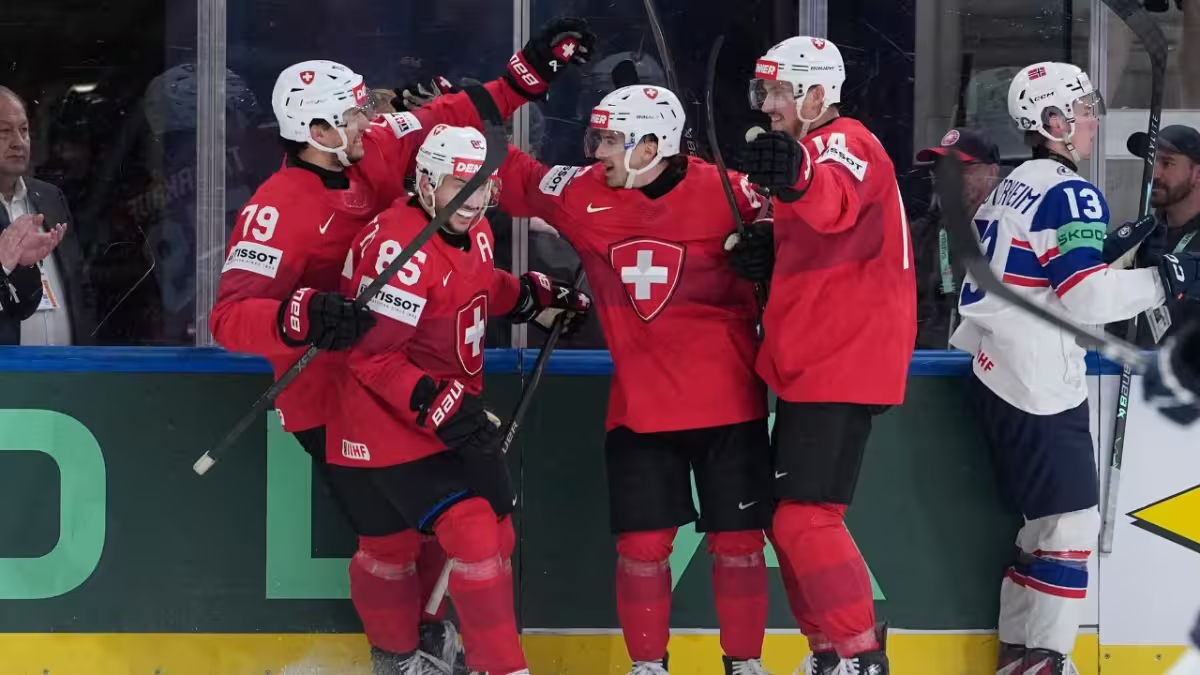
That result was decisive. Belgium beat the United States 4–1 in Seattle and secured a place in the World Cup quarter-finals, giving the jersey a second life beyond design talk. The win also fit a wider pattern in Belgium’s tournament look: the home kit draws on the national flag’s colors and a fiery motif tied to the Red Devils name, while this away version leans hard into Magritte instead of national-strip simplicity.
The choice makes sense once the references are unpacked. Magritte’s 1929 line about “the iron bells hanging from the necks of our admirable horses” sprouting like dangerous plants at the edge of an abyss reflects the same instinct that runs through the shirt: ordinary objects made unfamiliar, then made to mean more. Adidas and Belgium did not just want a bright alternate uniform. They wanted a jersey that read as Belgian before the ball was even kicked.
That is why the pink and blue matter. The colors are not random decoration, but a direct lift from the artist’s work and an attempt to translate a canvas into fabric. In a tournament built on national symbols, Belgium chose to wear an argument about identity, and for one night the argument was visible even in defeat’s opposite: a win, a quarter-final place, and a shirt that asked viewers to look twice.
