


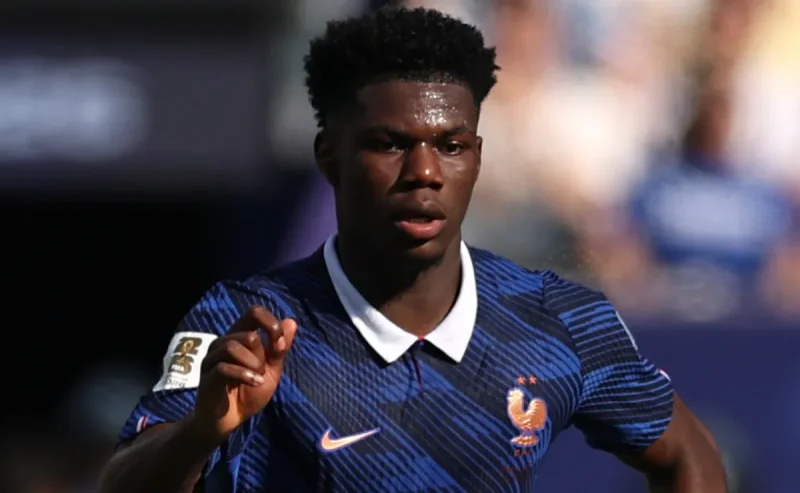
France left Aurelien Tchouameni on the bench for its 2026 World Cup quarterfinal against Morocco, a call that kept the midfielder available but not in the starting XI at Boston Stadium in Foxborough, Massachusetts. Didier Deschamps chose Manu Koné and Adrien Rabiot in central midfield instead.
The move mattered because this was not a routine rotation. France and Morocco were playing for a place in the semifinals of the 2026 FIFA World Cup, and Tchouameni had only recently returned to partial team training after a lingering groin/adductor muscle issue from July 3. He had also missed France’s 1-0 Round of 16 win over Paraguay, which made his bench role against Morocco a sign that recovery had not fully translated into a start.
Deschamps’ decision was described as tactical as well as physical, and it fit a France lineup built to keep options open. Kylian Mbappe, Ousmane Dembélé and Désiré Doué led the attack, while Bradley Barcola was also left out of the starting XI for tactical reasons. That left France with a midfield designed around Koné and Rabiot, and Tchouameni as a possible second-half option rather than a guaranteed starter.
That is the point where the selection becomes more revealing than the injury itself. A player can return to partial training and still be held back when the stakes rise, especially in a knockout match where a coach may prefer fitness certainty and tactical balance over reputation. For Tchouameni, the bench was not a setback so much as a marker of where he stood in the recovery process: available, trusted, but not yet at the level Deschamps wanted from the first whistle.
France’s choice suggests the staff was protecting a key midfielder while keeping him in reserve if the match demanded it. Whether Tchouameni had enough in him for more than limited minutes was left unanswered by the lineup itself, but the message was clear enough. In a quarterfinal, France preferred control now and flexibility later.
