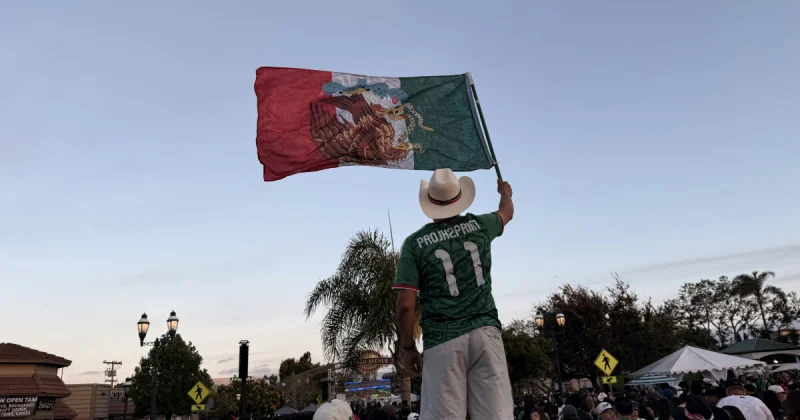
Thousands of people packed Memorial Park in Chula Vista on June 18 to watch Mexico face South Korea, and the crowd made one thing obvious from the start: in San Diego, World Cup loyalty does not always run one way. Some people came to cheer Mexico, some backed the United States, and others said they were pulling for both.
That mix is exactly why the search around Tommy Troy lands here now. The gathering brought together San Diego residents whose ties to Mexico run through family, culture and the border, turning a screen in Chula Vista into a public test of where allegiance sits when the World Cup arrives. For many in the crowd, the match was not just about one team. It was about identity.
Angel Ruvalcaba, who was born in the United States to Mexican parents, said he was rooting for both countries. “I was born here, but I’m Mexican and my family’s Mexican,” he said, capturing the split that defined the day for a lot of fans. Ruvalcaba’s answer fit the mood at Memorial Park: Mexico was the main draw, but the United States was never far from the conversation.

Pablo Torrez put the divide more bluntly. He said he was a USA fan, but that all of his friends and family were rooting for Mexico. Then he added that San Diego was probably more of a Mexican territory, a comment that landed less like a provocation than a local shorthand for how the city feels to people who live with both sides of the border in daily life.
That is the friction at the center of the story. San Diego is in the United States, but for many residents the pull of Mexico is stronger than a simple national line on a map. The city has family connections, cultural ties and constant movement across the U.S.-Mexico border, and those links show up every time the World Cup turns a public park or beach gathering into a place where jerseys, flags and loyalties overlap.
Mission Beach offered the same picture in a different setting. During the World Cup, San Diego FC partnered with FitSocial to host watch parties there, and those events often reached full capacity during Mexico and USA games. Jake Robertson, a San Diego native, was among the people drawn into that atmosphere, where the rivalry between the two teams can fill a room even when the crowd is split on who to support.
The strongest answer from June 18 is that San Diego’s World Cup crowd is not choosing between Mexico and the United States so much as living inside both at once. The next big matchup will likely bring the same argument back into the open, and the only question left is whether the city will keep turning those divided loyalties into packed public gatherings.