


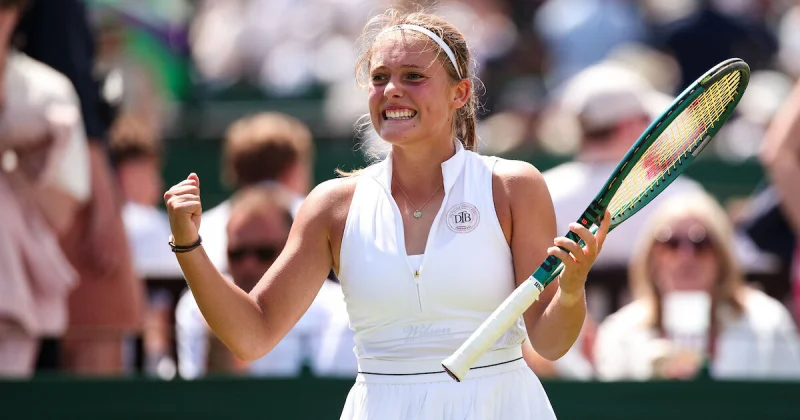
Ida Wobker’s Wimbledon junior singles run ended in an instant on 4 July when she was disqualified after throwing her racket to the ground in anger and sending it bouncing into the spectators. No one was injured, but the German 15-year-old was out of the match against Maria Valentina Pop and out of the singles draw.
The result matters because Wobker is not a fringe name in German tennis. She reached the top 1000 of the world rankings in July 2025 at 14, is listed at 689 in the world and sits second in the U16 group among players already in the professional rankings, a rapid rise that has made her one of the country’s most watched juniors.
Barbara Rittner, who caught the racket in the crowd, called the moment very unfortunate and said Wobker is actually not aggressive. That is the part that makes this story sting. Wobker has built her reputation on discipline and pace, not outbursts: she won the Norddeutsche U11 title in 2021, added the U14 national title in 2023 and the U16 crown in 2024, then took her first ITF title in Dublin in August 2024. She has also been tracked by the Nadal Academy in Mallorca and Patrick Mouratoglou’s academy, but chose her own path with her family.
Her rise has not been confined to junior events. She played for DTV Hannover in the 2. Bundesliga and helped SCC Berlin stay in the 1. Bundesliga in the summer described by those around her, while Dirk Stöbitsch has described her game as fast, aggressive and built around winners. Rittner said Wobker reminds her of Aryna Sabalenka in athleticism, shot power and court positioning, and Wobker herself has said she wants to become world No. 1 and play Grand Slams.
What happens next is narrower, and it is the only good news for her inside Wimbledon: Wobker and Denisa Zoldakova are still allowed to continue in the doubles. What has not been answered is whether the disqualification carries any further punishment beyond the singles exit, and that is now the question hanging over a player who cried, felt ashamed and left the referees’ office with the kind of setback that can follow a teenager long after the racket stops moving.
