


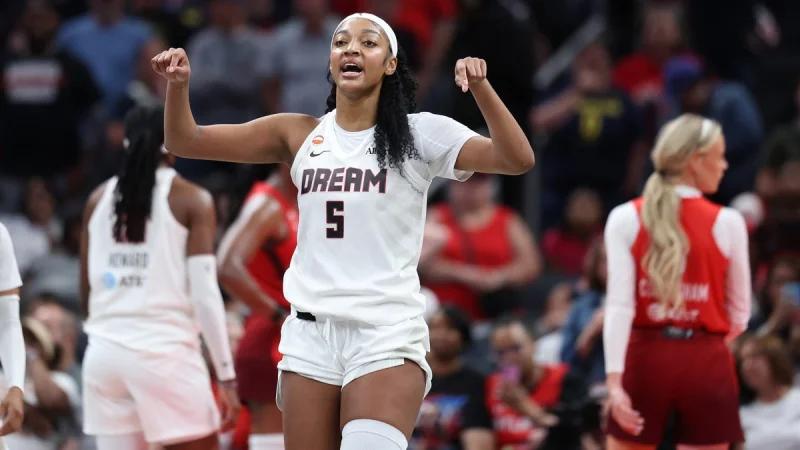
The WNBA All-Star starters are in, and the player vote behind them is already being argued over. Fewer than half of the league’s rostered players submitted ballots, even though that vote counts for 25 percent of the final total.
That matters because the player side is supposed to carry real weight, not just symbolism, when the league sorts out its All-Star selections. In practice, though, the ballots do not speak for the whole locker room. Across the other 14 teams, participation reached 50 percent, but the overall number still fell short of the rostered player pool, leaving the result vulnerable to questions about how much the room actually reflected the league.
Kelsey Plum finished 12th in the player vote, a result that sharpened the debate around how the starters were chosen and who gets rewarded when players cast ballots for teammates, friends and familiar names. Sue Bird said on her podcast that she would fill out her ballot by picking her teammates and her friends, including Diana Taurasi, which is the kind of candid answer that makes the process feel less like a neutral referendum than a private judgment passed through a league-wide filter.
The Los Angeles Sparks were partly excused from the low turnout because not all of their players received ballots in time, but that explanation only goes so far when the player vote still makes up a quarter of the total. A system can be fair on paper and still leave room for distortion when participation is uneven, and the gap between formal influence and actual turnout is now part of the story around the 2026 WNBA All-Star process.
Sophie Cunningham gave the controversy another layer this week when she said she “didn’t think twice” about the Trump administration using a recent viral meme of her, adding that “Every company has done it” and “They’re just the one to also get on board.” She also said, “If you’re gonna live by the praise, you’re gonna die by the hate,” a line that fits a league where public attention, online reaction and on-court recognition keep colliding.
That is why the announcement lands as more than a routine roster reveal. The starters are set, but the process that helped shape them is not sitting still, and the unanswered question is not whether the vote counted — it did — but whether the people most affected by it actually participated enough for the result to feel like the league’s full voice.
