


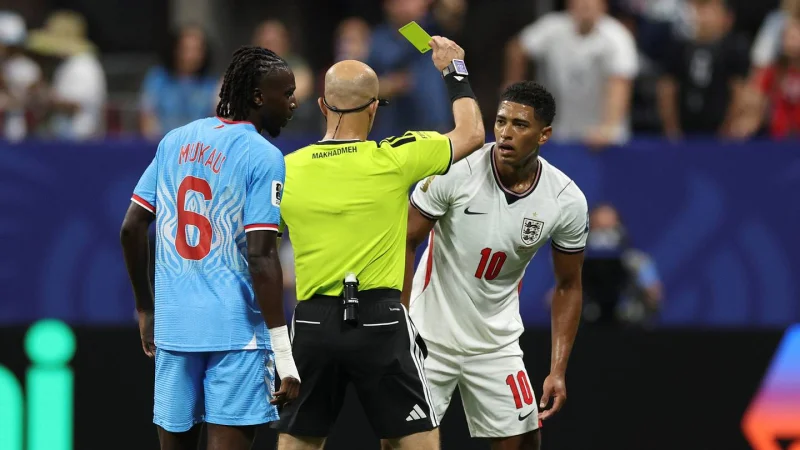
The World Cup’s card rules matter now because a player who picks up two yellow cards can be forced out for one match, and that can change who is available when the knockout rounds begin. For players like Declan Rice, that kind of bookkeeping is not abstract; it is the difference between staying on the field and sitting out the next round.
That is why what does a yellow card mean in soccer is more than a rules question once the tournament turns into elimination football. In the group stage, two yellow cards bring a suspension for the next match. If that second booking comes in the final group match, the punishment rolls into the Round of 32. A player booked on Matchday 1 and again on Matchday 3 would miss the first knockout game.

The cutoff matters because the disciplinary slate is not carried forever. After the group stage, all yellow cards are cleared, and FIFA’s rules include points where those cards are wiped. From the Round of 32 through the quarterfinals, the counting starts again: two yellow cards trigger a one-match suspension. A booking in the Round of 32 and another in the Round of 16 would mean missing the quarterfinals.
That makes the fine print more important than it sounds. Yellow and red cards carry extra weight in the knockout stage because every game is win-or-go-home, and one suspension can force a manager to alter a team for a decisive match. England’s Declan Rice is the kind of player who could be managed carefully for that reason, especially when a second caution can ripple into the next round.
The part readers still need to keep straight is simple: the cards are cleared after the group stage, but not before a final group-stage booking can spill into the Round of 32. After that reset, the rule applies again through the quarterfinals, which means discipline stops being about just one match and starts shaping the path through the bracket.
