


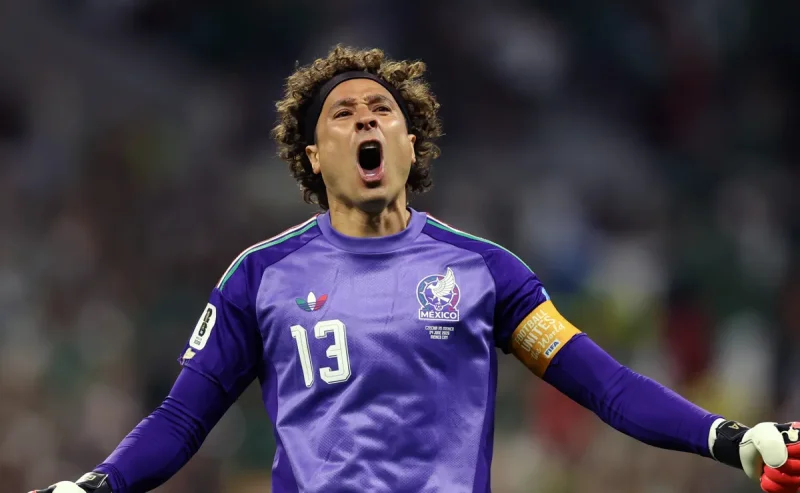
Karla Mora is the woman who won over Guillermo Ochoa, and the story of how that happened begins far from the stadiums that made his name familiar across Latin American sports. She is from Guadalajara, Jalisco, and had already started building a career in modelaje and publicidad when her life intersected with his in 2009.
That search interest is not only about Ochoa, whose career has kept him in the public eye for years and whose name still draws attention through stories such as Memo Ochoa makes World Cup history with sixth tournament appearance and Guillermo Ochoa keeps pressure on as Tala Rangel returns to Guadalajara. It is also about the woman beside him, a figure described less by headlines than by continuity: campaigns, fashion shows by local designers and photo shoots before the relationship became public, then the move that followed him from place to place.
Regina Merino arranged the blind date that brought Mora and Ochoa together, a simple gesture that set off a relationship that began in 2009 and lasted long enough to become part of the goalkeeper’s career map. From there, Mora went with him to Ajaccio in France, then stayed with the family through Málaga and Granada in Spain, Standard de Lieja in Belgium and later Salernitana in Italy. The pattern matters because it shows a private life built around movement, not just fame.
That is also where the friction in the story sits. Mora is presented as a stable, low-profile presence, yet she is linked to one of the most mediatic figures in Latin American sports. The contrast is not a contradiction so much as the price of proximity: she kept working her own path before Ochoa became part of it, and then adapted to a life that rarely stayed in one country for long.
After several years together, the couple decided to formalize their union in Ibiza, Spain, but the publicly available account stops short of giving the exact date or ceremony details. That missing piece is the one readers still do not have, even as the outline of the relationship is clear: a blind date in 2009, a career carried across Europe, and a partnership that helped define the quieter side of Ochoa’s life.
