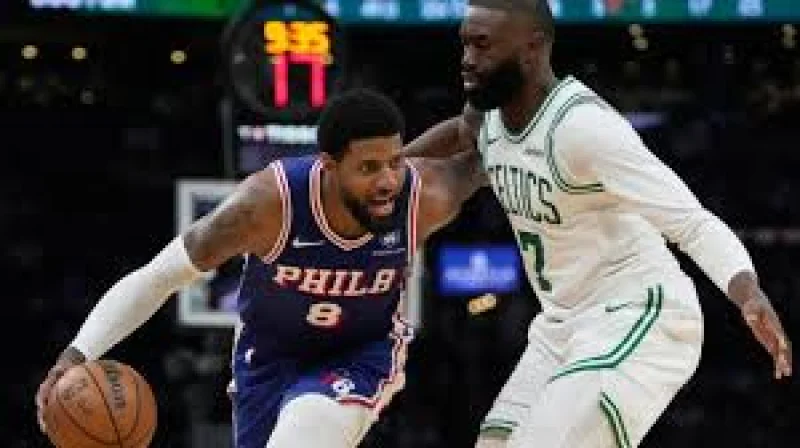
The Celtics traded Jaylen Brown to the Sixers on Wednesday, sending a franchise cornerstone to Philadelphia and bringing back Paul George and two first-round picks. It was the kind of move that changes the shape of a season in one line and leaves the next question hanging over Brad Stevens: why now, and why this package?
The answer matters because Brown was not a fading veteran or a spare part. He is not yet 30 years old, made second-team All-NBA this year, finished sixth in Most Valuable Player voting and won Finals MVP two summers ago. For a player who had been a constant through a decade of consistently high achievement and one banner-raising, the return of a 36-year-old George and two first-round picks looks, to many Celtics fans, like a steep price for giving up the center of the team’s identity.
That reaction is not happening in a vacuum. Stevens became president of basketball operations five years ago and built a reputation for moves that landed well: Kemba Walker for Al Horford, Derrick White, Marcus Smart for Kristaps Porzingis and two first-round picks, and a willingness to act when the Bucks sent Jrue Holiday to Portland to get Damian Lillard. He also knows Brown and Jayson Tatum as well as anyone, because he coached them in their NBA youth. That track record is why this trade hits so hard. Fans did not just dislike it. They hated it pretty close to unanimously, with some calling for him to be fired.
Yet the deal also exposes the limits of a front office legend built on past wins. George is 36 years old and has been oft-injured, which is exactly why many around the team are struggling to square this return with the value of Brown, who is still in his prime and had just turned in one of the best seasons of his career. The idea that Brown for Giannis Antetokounmpo would have made sense only sharpens the critique. Instead, the Celtics settled for a package that looks like 75 cents on the dollar and, in the simplest definition, failed to get the best player back in the trade.
Stevens now has to explain a move that can be defended only if he believes age, health and flexibility outweighed star power. If he does not make that case quickly and clearly, the anger around Brown’s departure will keep growing, because the question is no longer whether the Celtics noticed the cost. It is whether they paid it willingly.